

Dapur Brands Singapore: a multi-brand restaurant website built to scale
Dapur Brands runs four quick-service restaurant brands, from Southern fried chicken to hearth-baked pizza, under one corporate roof.
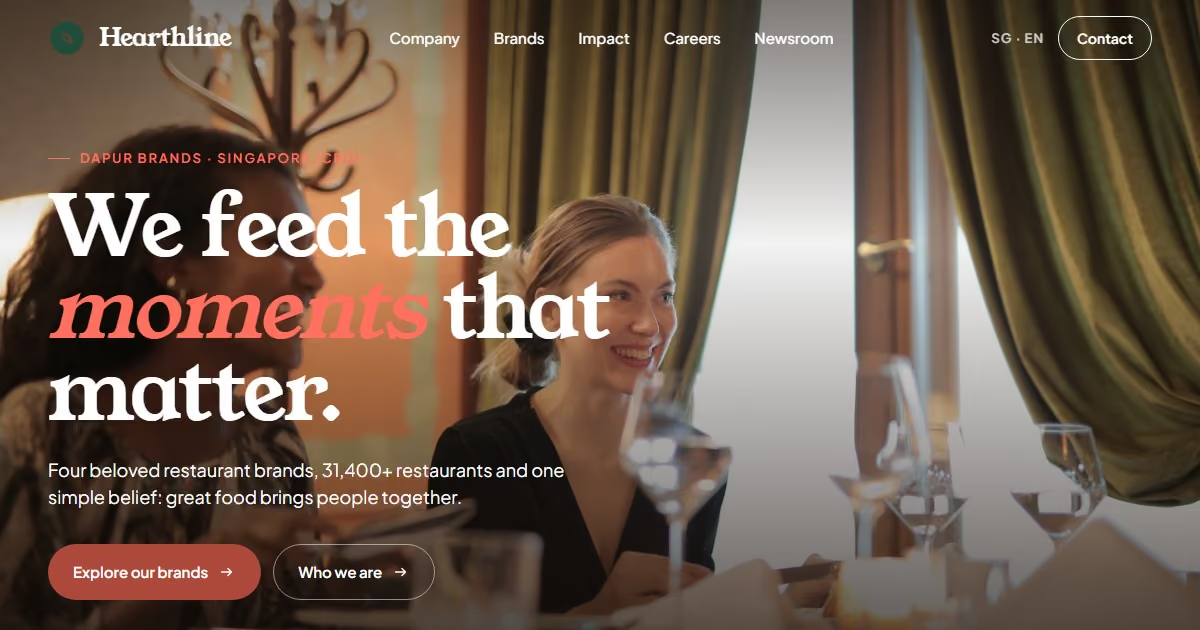
Dapur Brands runs four quick-service restaurant brands, from Southern fried chicken to hearth-baked pizza, under one corporate roof. They needed a digital home that felt as warm as their food and could handle the complexity of an enterprise restaurant group. As a multi-brand restaurant digital agency, we delivered the brand identity, a modular design system and 16 page templates. Together they cover the brand portfolio, newsroom, franchising, careers and impact, all built to scale across every market Dapur serves. The Singapore edition speaks to a local audience: prices in S$ inclusive of 9% GST, PDPA consent and a Data Protection Officer in the footer.
Project facts
- Client: Dapur Brands Pte Ltd (fictional)
- Sector: Multi-brand quick-service restaurant group
- Markets: Singapore (CBD) headquarters, with brand support centres in Tanjong Pagar, One-north and Jurong; restaurants in more than 120 countries
- Services: Market localisation · Copywriting · Brand adaptation · Restaurant group website design · Accessibility (WCAG 2.2 AA) · SEO foundations
- Templates: 42 page templates shared with every Dapur Brands edition
- Stack: Hand-built HTML, CSS and vanilla JavaScript; one strings file and one theme file per market
The brief
One family, four brands, one system
Dapur's corporate site had to make four very different restaurant brands feel like one family without flattening their personalities, give franchise partners, job seekers, journalists and investors a clear path to what they need, and roll out to new countries with copy changes instead of a redesign. For Singapore we localised the content file: the headquarters moved to Singapore (CBD), consumer prices show S$ inclusive of 9% GST, dates follow the 12-hour clock, and the footer carries a demo UEN and a Data Protection Officer contact under the PDPA. The templates and design system stay untouched.

Designing for Singapore
What actually changed between the US and this edition
- Headquarters - US edition: Austin, Texas · Singapore (en-SG): Singapore (CBD), with support centres in Tanjong Pagar, One-north and Jurong
- Entity - US edition: Dapur Brands Inc. · Singapore (en-SG): Dapur Brands Pte Ltd, with demo UEN
- Currency - US edition: US$ prices, sales tax added at checkout · Singapore (en-SG): S$ prices inclusive of 9% GST; restaurant menus note '++' for service charge and GST
- Privacy - US edition: US state privacy notices · Singapore (en-SG): PDPA 2012 with a Data Protection Officer and Do Not Call registry checks
- Dates & time - US edition: Month DD, YYYY; 24-hour clock · Singapore (en-SG): 18 October 2026; 12-hour clock
- Places - US edition: Austin, Texas; US cities · Singapore (en-SG): Singapore (CBD), Marina Bay, Tanjong Pagar, One-north, Jurong
- Seasonality - US edition: US holidays · Singapore (en-SG): CNY, Hari Raya, Deepavali, Christmas, GSS, 11.11 and 12.12, National Day 9 August
- Look - US edition: Cream, charcoal, paprika red, saffron; Fraunces + Bricolage Grotesque · Singapore (en-SG): Pale mint, white, brick red and olive; Young Serif + Plus Jakarta Sans, 22px radius
stills/ (to record)
Brand adaptation
The same Dapur Brands, with a local accent
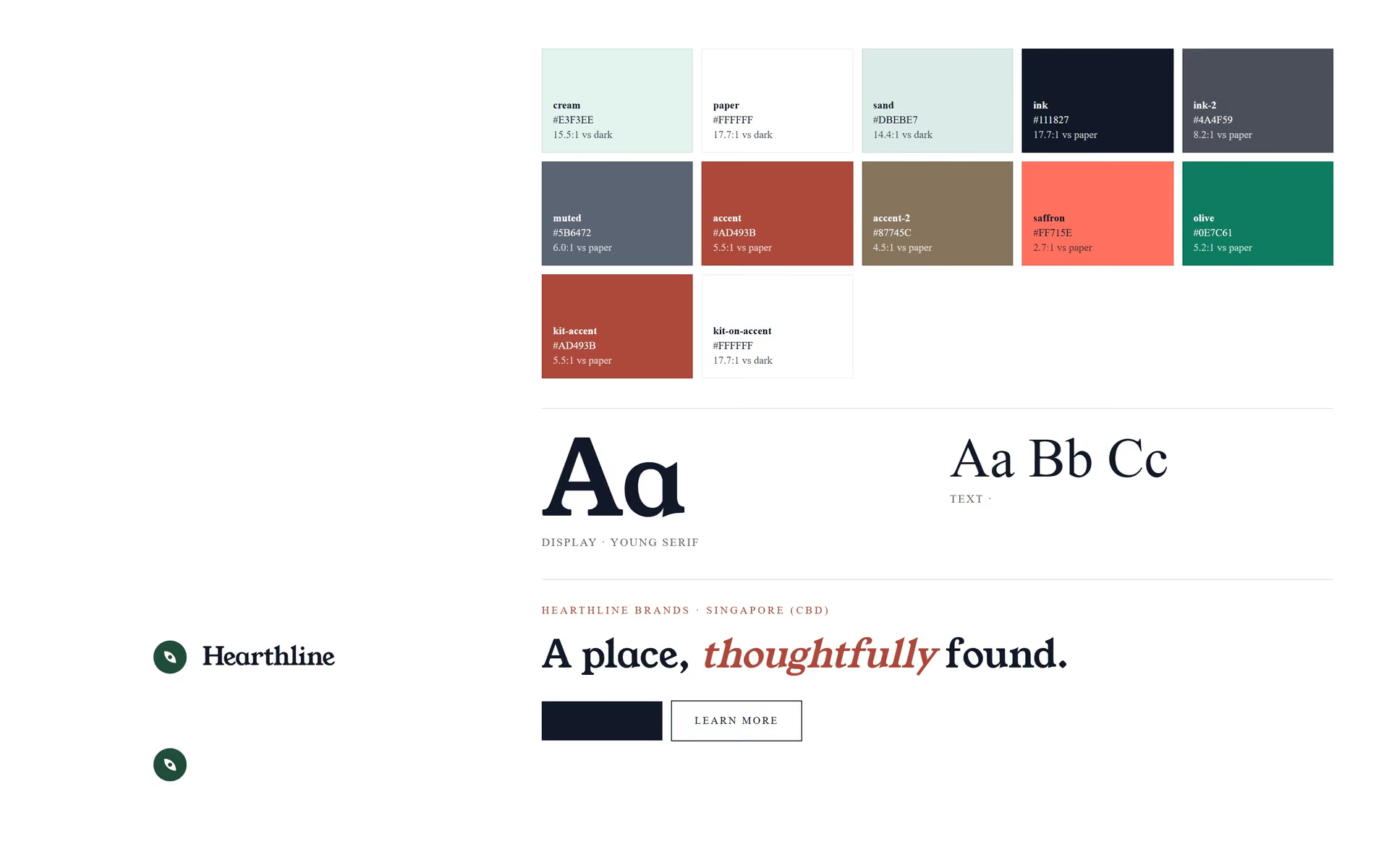
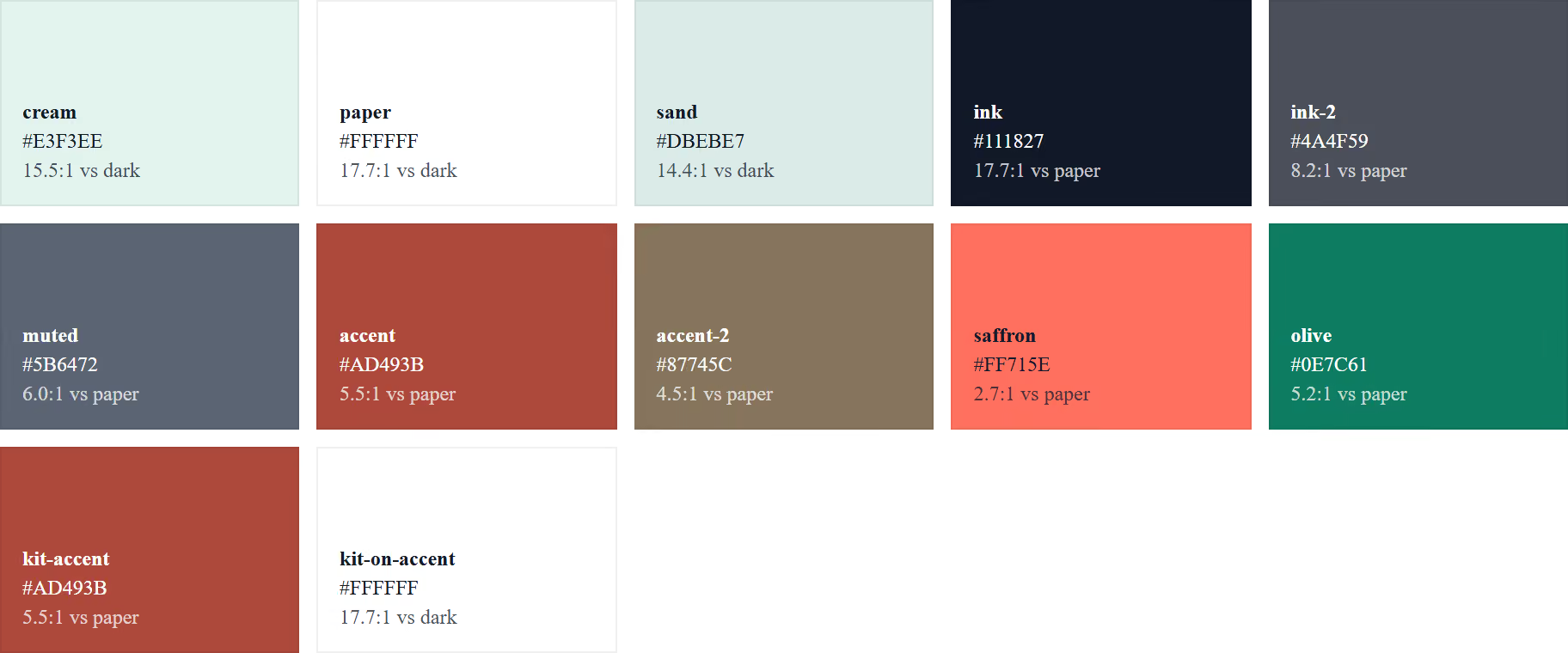
The parent brand still feels like a kitchen, not a conference room. The hearth-arch logomark holds a single flame. Young Serif brings menu-board warmth to headlines; Plus Jakarta Sans, designed in Southeast Asia, keeps the interface modern. The palette shifts to a tropical register: pale mint and white for space, brick red for accents, olive for secondary detail. Each restaurant brand keeps its signature accent through the --brand token.

Homepage and key journeys
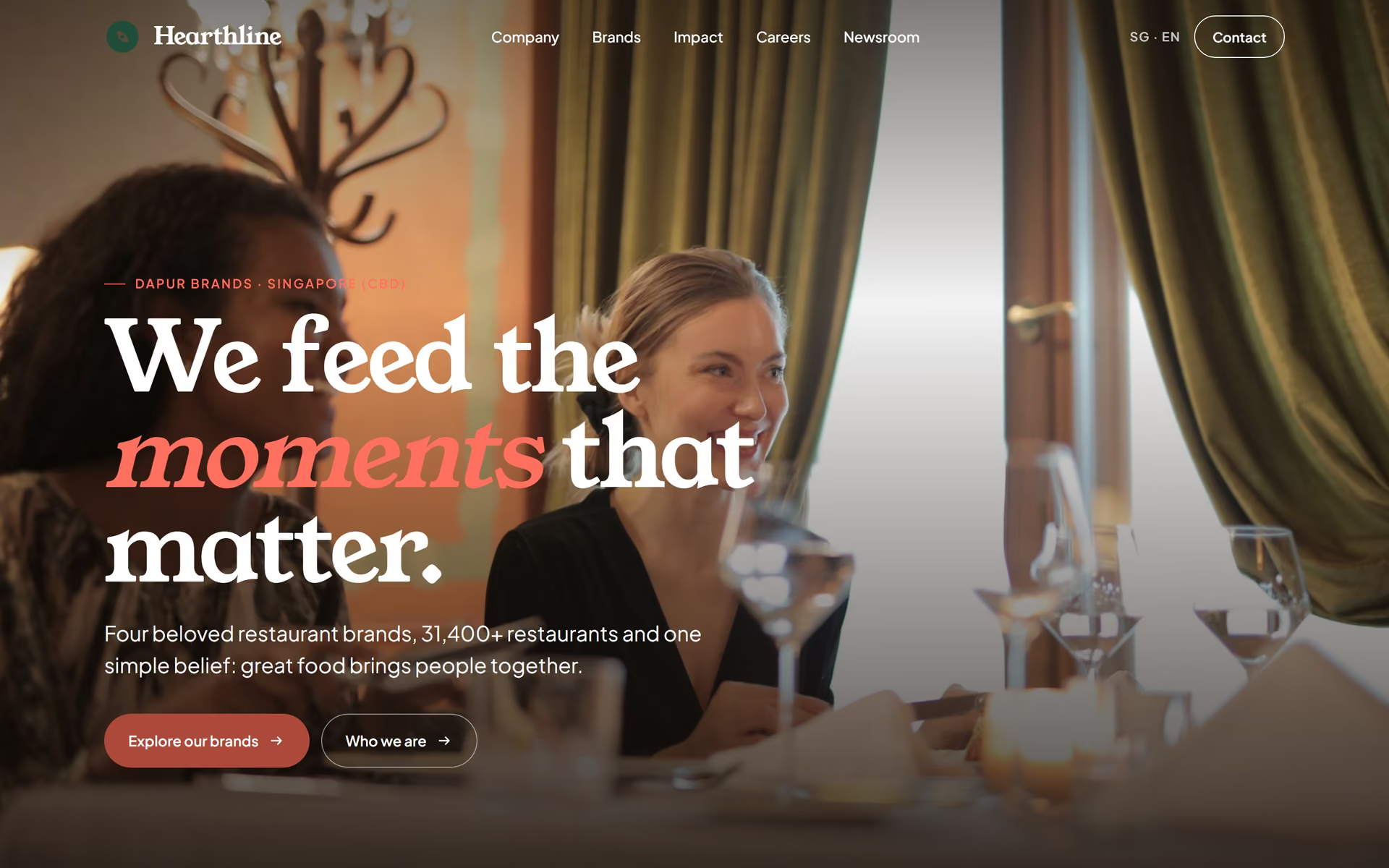
A full-bleed dining-room hero eases in from a dim zoom. Below it, a slow-scrolling ribbon of brand names leads into a statement that lights up word by word as you scroll. Live counters tick up to restaurants, team members and system sales, formatted for Singapore (S$48B). The page then flows into brand cards, strategy, impact and the latest news. The most distinctive flow is the newsroom: filter chips (Press, Story, Snapshot, Video) work alongside a brand selector, and a shareable ?brand= URL lets each brand team link straight to its own coverage.
Compliance, accessibility and trust
- Privacy policy under the PDPA 2012, with a Data Protection Officer and Do Not Call registry checks.
- Footer with demo UEN and a Data Protection Officer contact.
- Consumer prices shown inclusive of 9% GST; restaurant menus note '++' for 10% service charge and GST.
- Passes automated WCAG 2.2 AA checks on every page at 360, 390, 768 and 1440 px: no contrast failures, no unreachable controls, no horizontal scrolling.
- A language switcher built from
hreflangsits in the header on desktop and in the footer on phones.
One system, twelve markets
Every visible string lives in one file per market, and every colour and typeface in one theme file. This edition needed no new templates or components: a strings file, a theme, regional photography and local legal content made it a different brand experience. For a restaurant group with international plans, a new market becomes a content project rather than a rebuild.
Deliverables
- Market profile: language, formats, legal and seasonality
- Full localised copy across 42 templates, header, footer and forms
- Brand adaptation: palette, type pairing and logo descriptor
- 29 regional photographs (Pexels, credited in
credits.json) - Local legal content
- Accessibility pass (WCAG 2.2 AA, automated) and QA at four screen widths
- Portfolio media: stills, full-page captures, scroll video, OG image, brand board
FAQ
How do you localise a restaurant website for Singapore?
Use S$ pricing inclusive of 9% GST, PDPA consent with a Data Protection Officer, local places such as Singapore (CBD) and Tanjong Pagar, and local seasonality from CNY to 11.11. The templates and design system stay the same.
Can one restaurant website work across multiple countries?
Yes. We separate content from templates, so each market has its own content file with local copy, numbers and formatting. The design and code stay the same, which makes rollouts fast and consistent.
What should a restaurant franchise website include?
Clear franchise opportunities, transparent requirements, development and real-estate support, and a one-step enquiry path. Over time it can grow into a gated franchise portal for operator resources.