

Modula: electronics website design for a modular laptop brand
A brand that sells modular laptops you can open, repair and upgrade. We designed and built its whole website: product pages, a laptop configurator, a parts marketplace and repair guides.
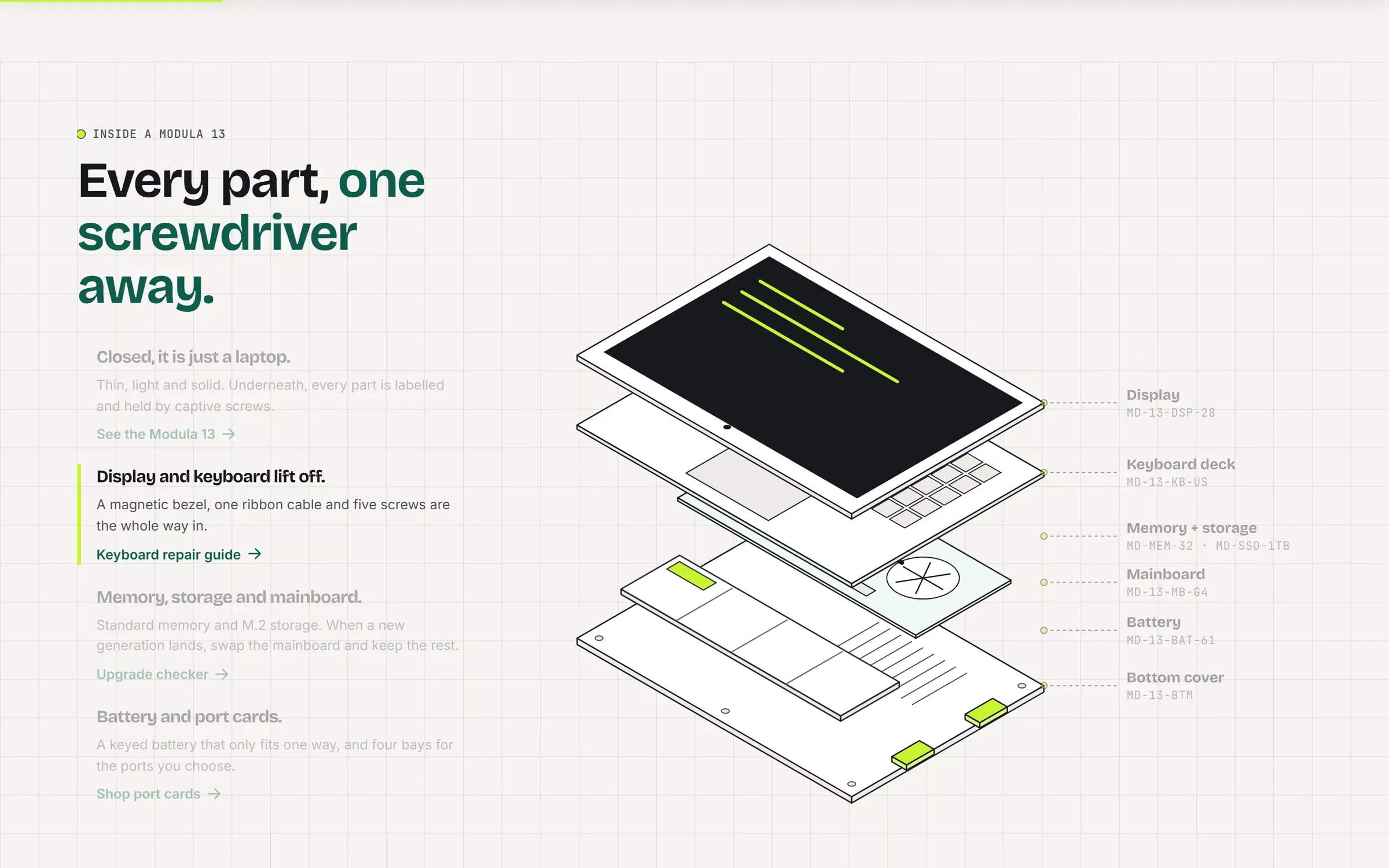
Product website design that explains a modular laptop
A modular laptop needs more explaining than a spec sheet. The home page leads with the promise, one screwdriver, and moves from model families to parts, repair and trade-in.
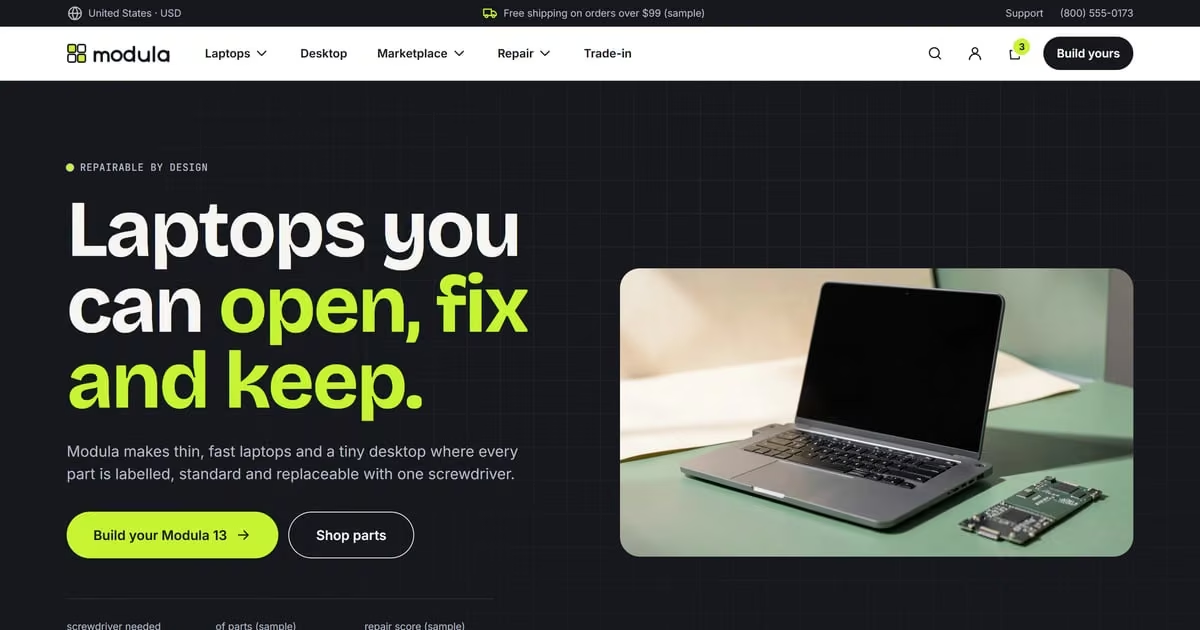
A scroll-driven exploded view of a modular laptop
As visitors scroll, an original line drawing of the laptop separates into display, keyboard, memory, mainboard, battery and port cards, each labelled and linked to the shop. It replaces a static hero with proof that every part is replaceable.
A laptop configurator people can finish
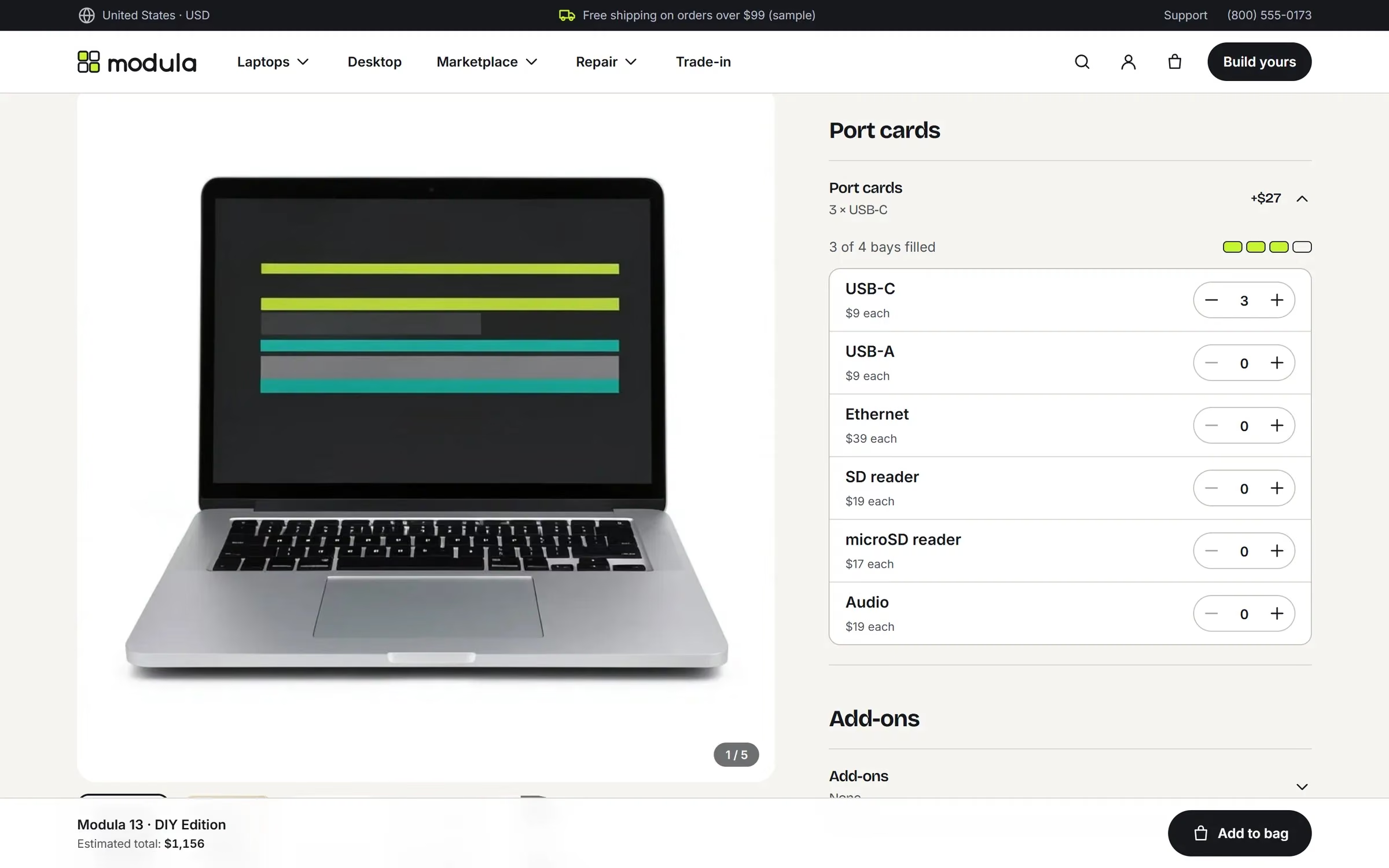
Visitors choose a DIY Edition or a pre-built laptop, then pick processor, memory, storage and ports. The total updates as they go, the port-card bays fill visibly, and a sticky bar keeps add-to-bag in reach.
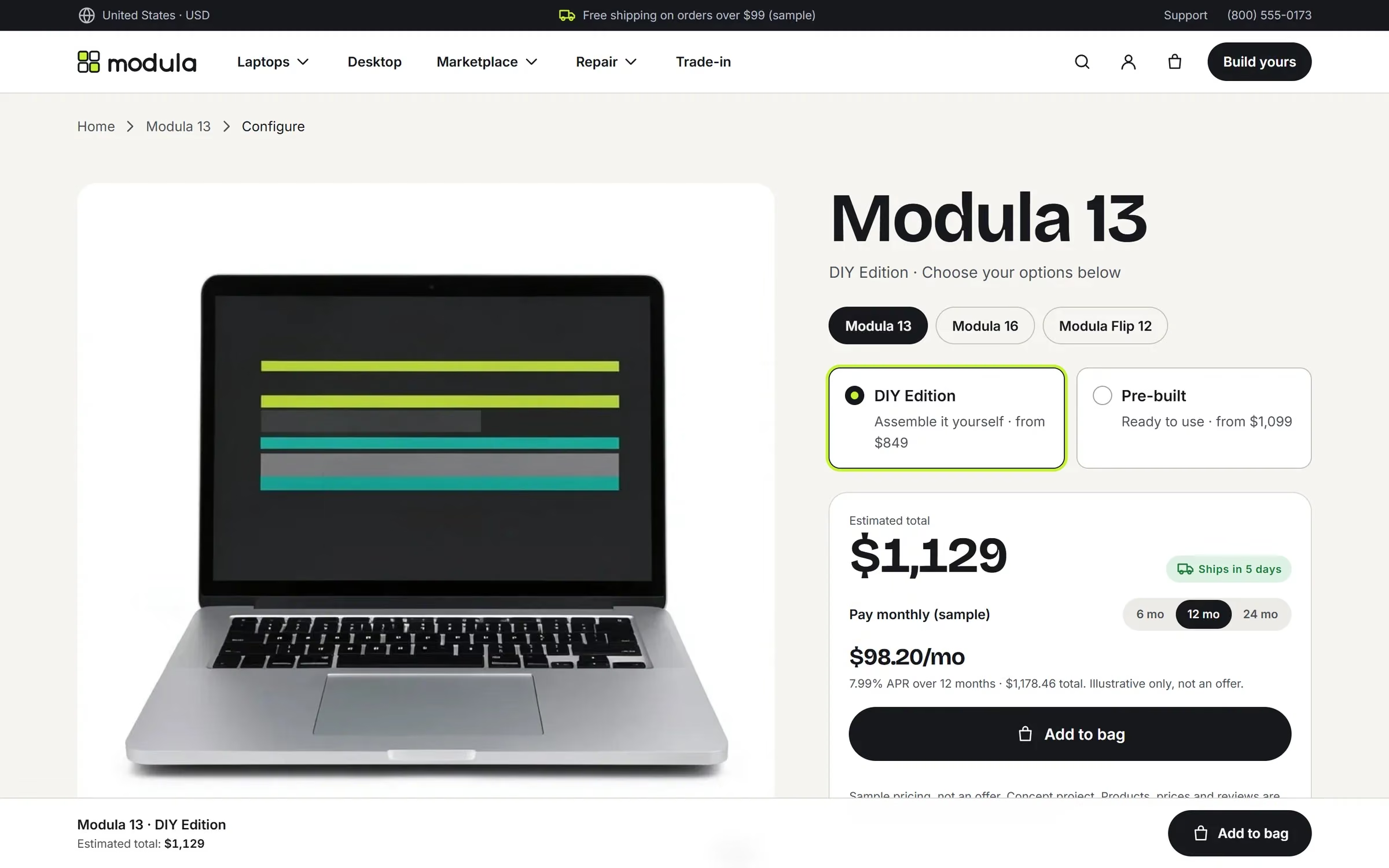
Build your own laptop, one clear step at a time
Every option shows its price difference and a plain-language note. 'Bring your own' choices make the DIY Edition feel achievable for first-time builders.
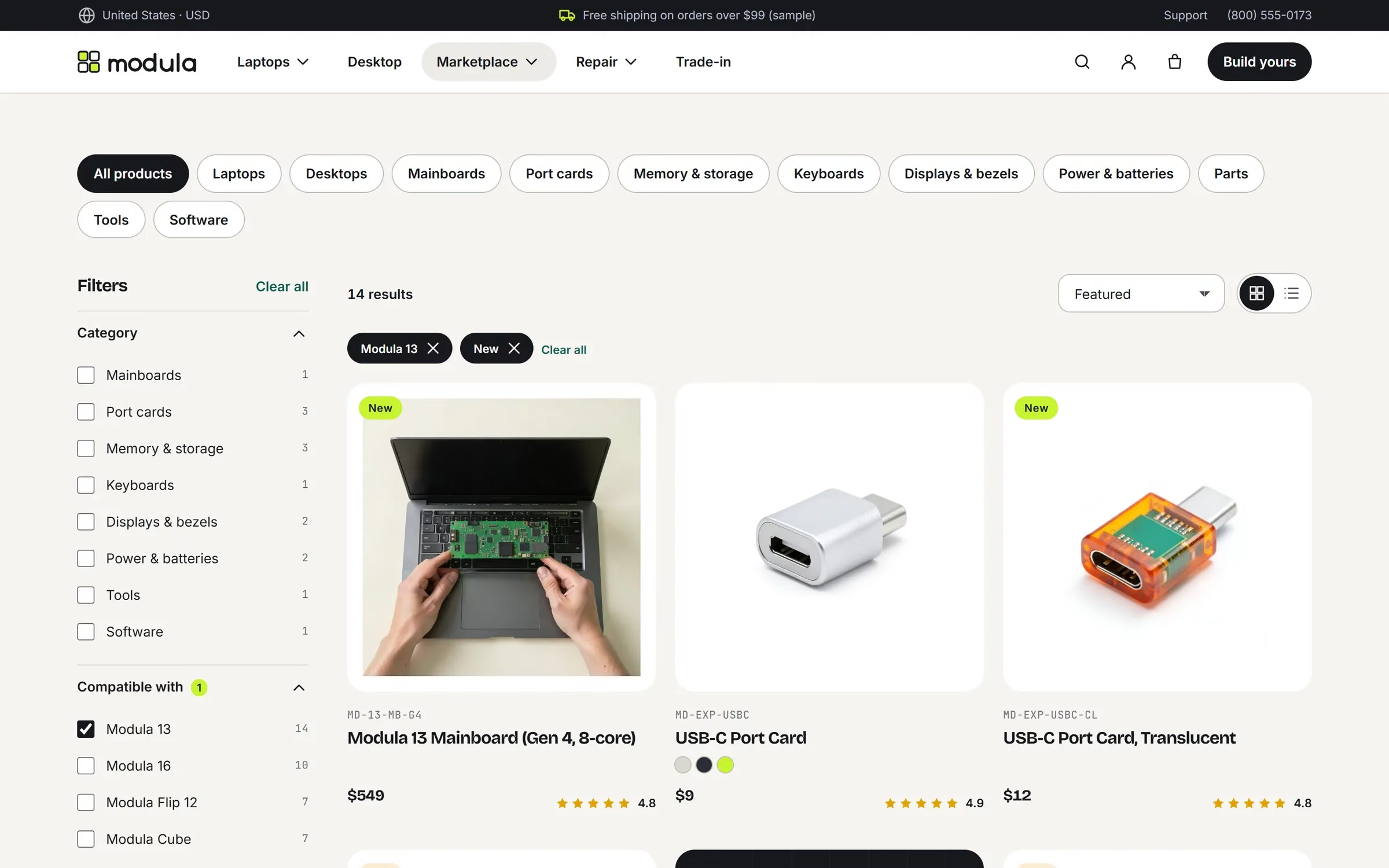
Ecommerce filters for a laptop with replaceable parts
The parts marketplace filters by category, compatible model, condition and price. Counts update with each choice, and every filter is saved in the URL so results can be shared.
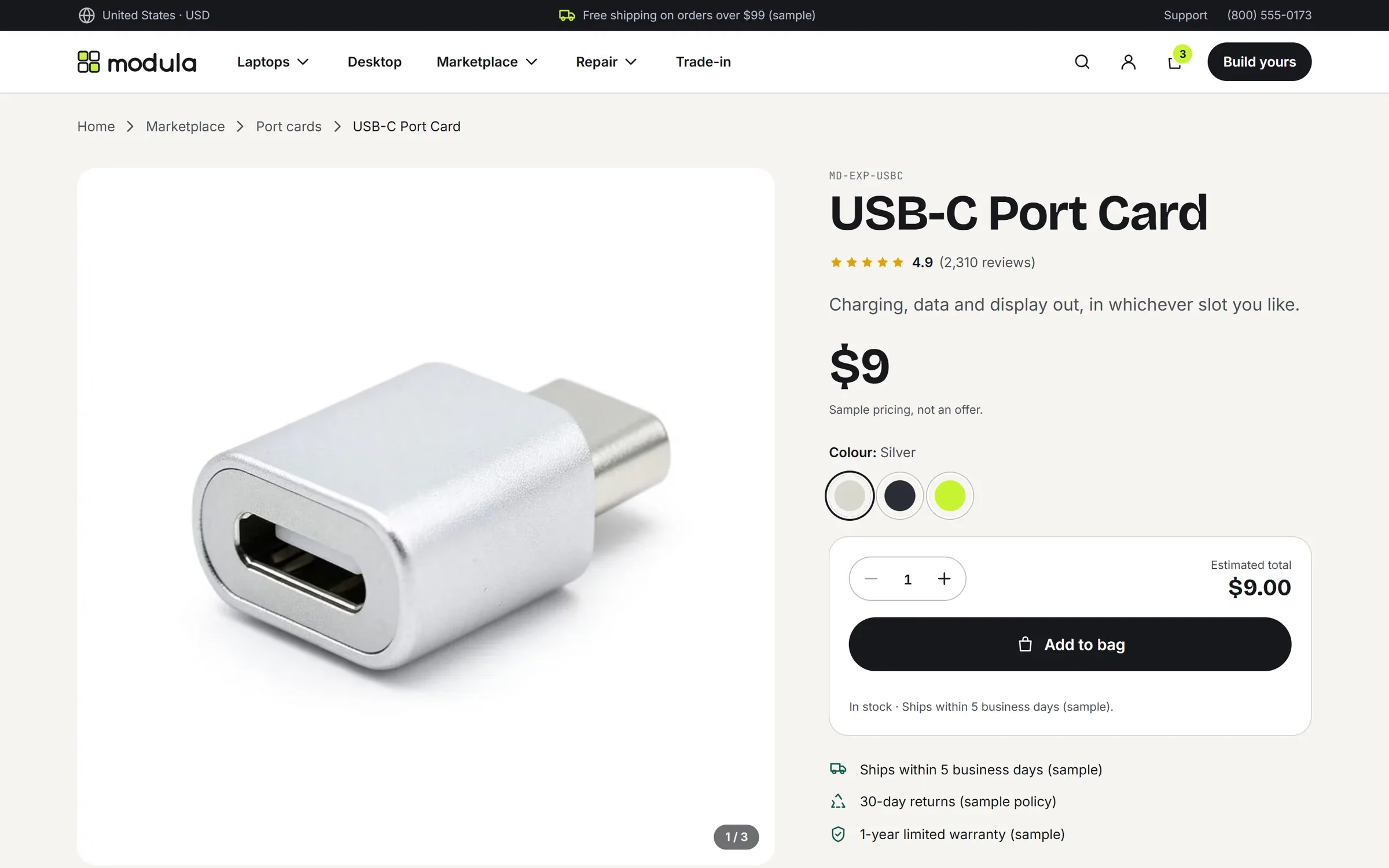
Product page web design for upgrades
Each product page answers the real question, 'will this fit my laptop?', with a compatibility table next to specs, reviews and the matching repair guide.
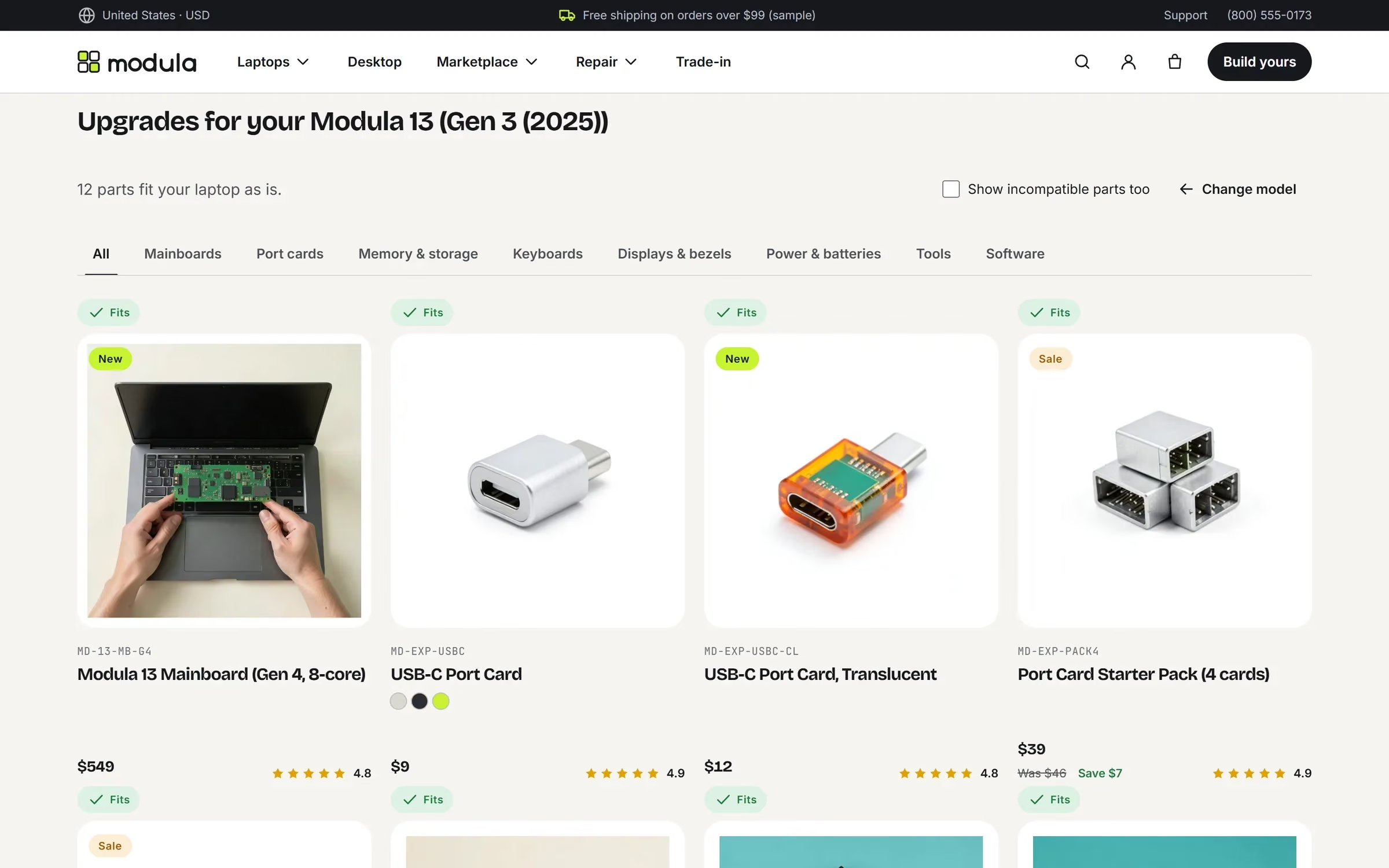
A checker for laptops that can be upgraded
Pick a model and generation, and the upgrade checker sorts every part into fits, needs an adapter or not compatible.
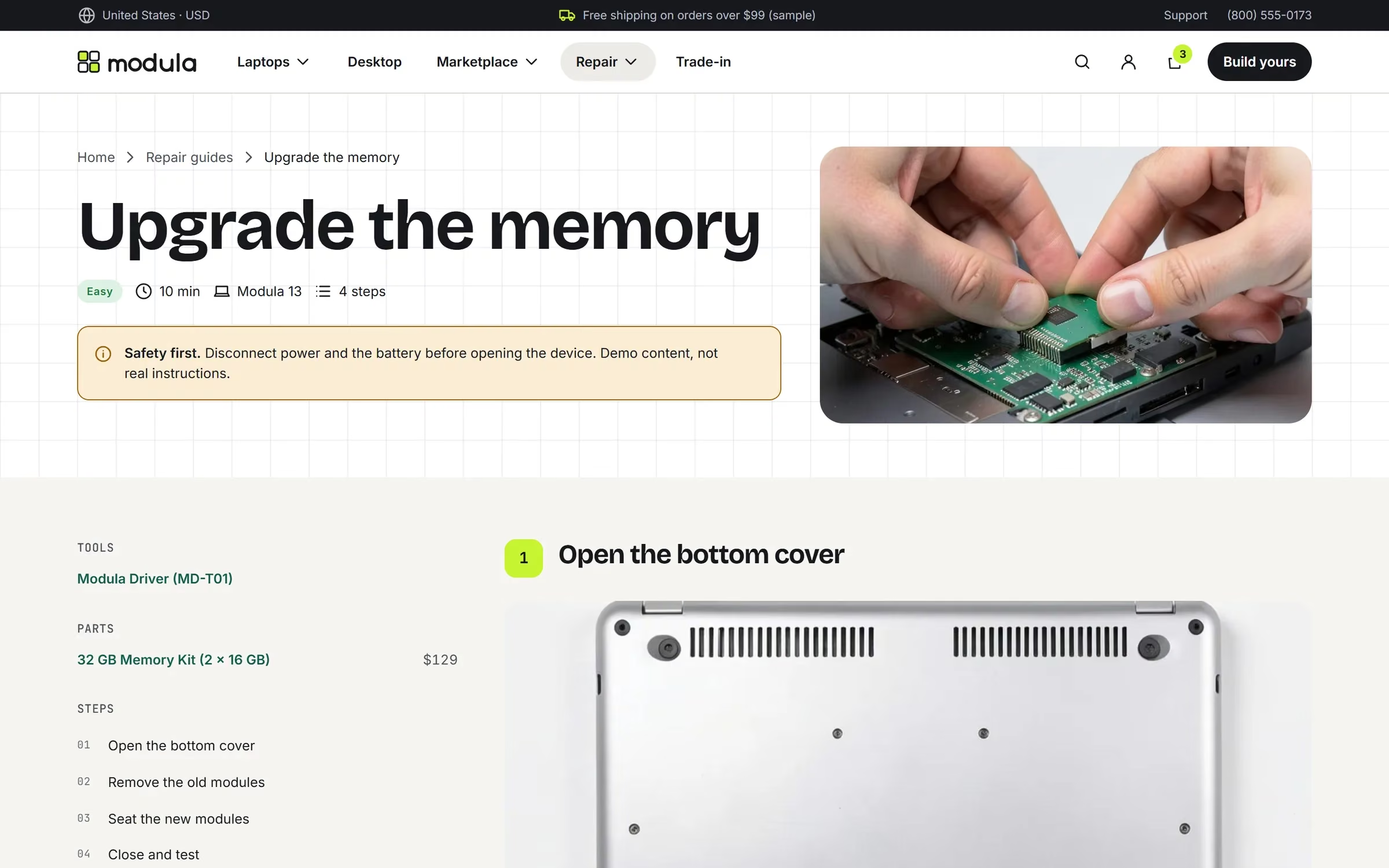
Repair guides for a repairable notebook
Step-by-step guides carry a safety notice, tools and parts lists linked to the shop, and numbered photos.
A trade-in flow for an old laptop
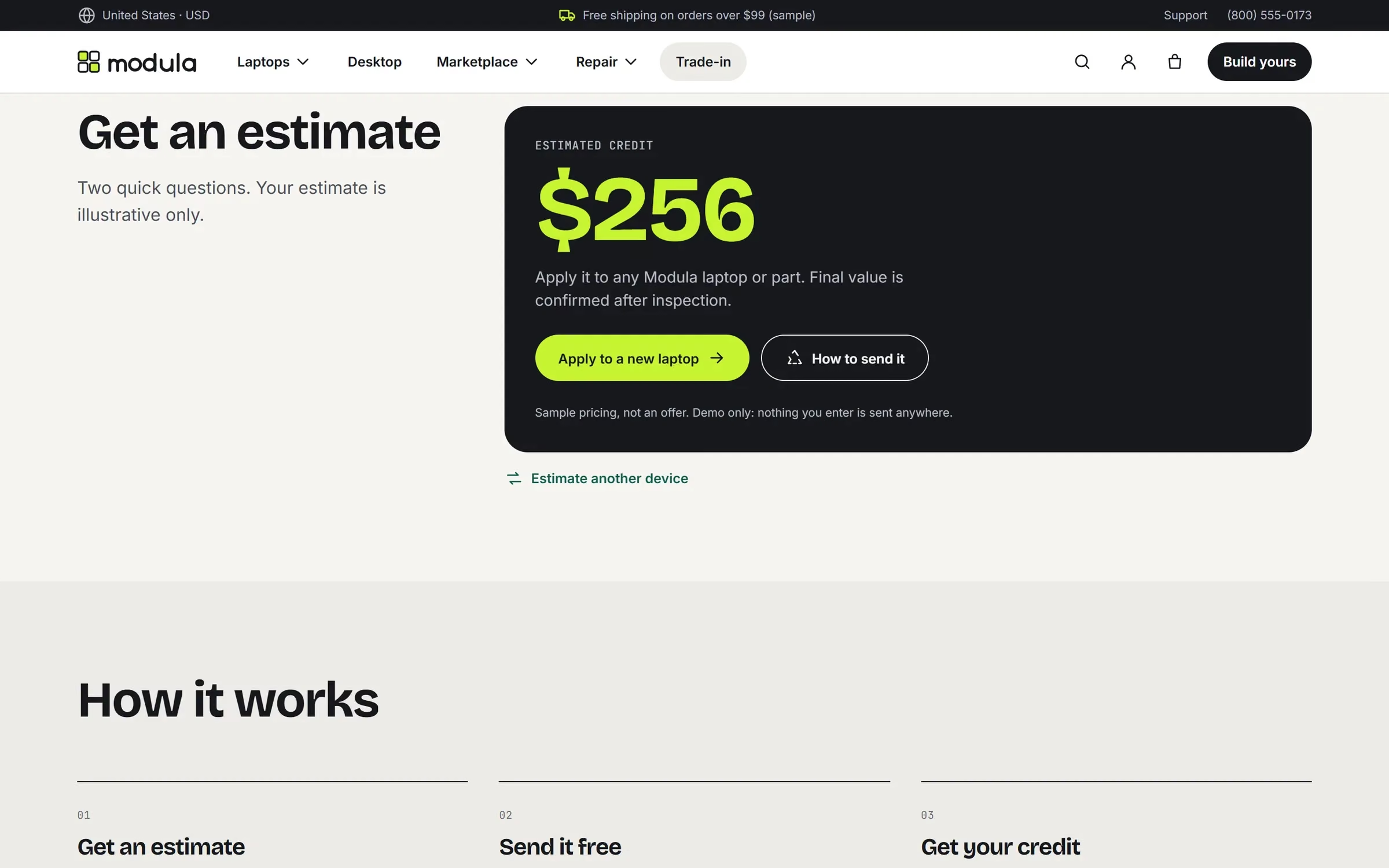
Two questions return a sample credit estimate, or a free-recycling path for devices past their value.
A design system behind the electronics website
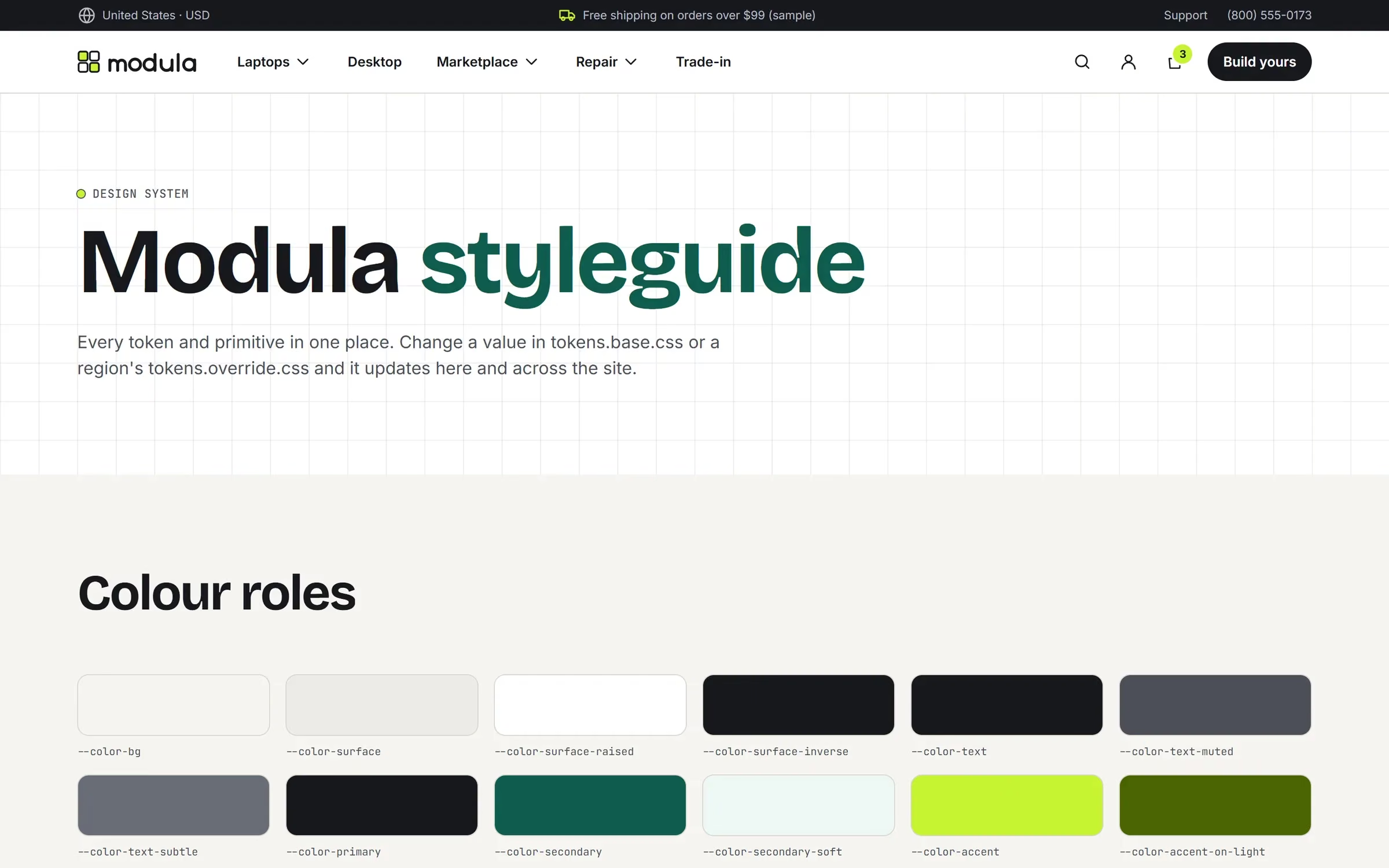
Graphite, circuit green and an electric-lime accent. Every colour, font, string and image lives in one place, so the site can be rebranded or translated without touching components.
Responsive from phone to desktop
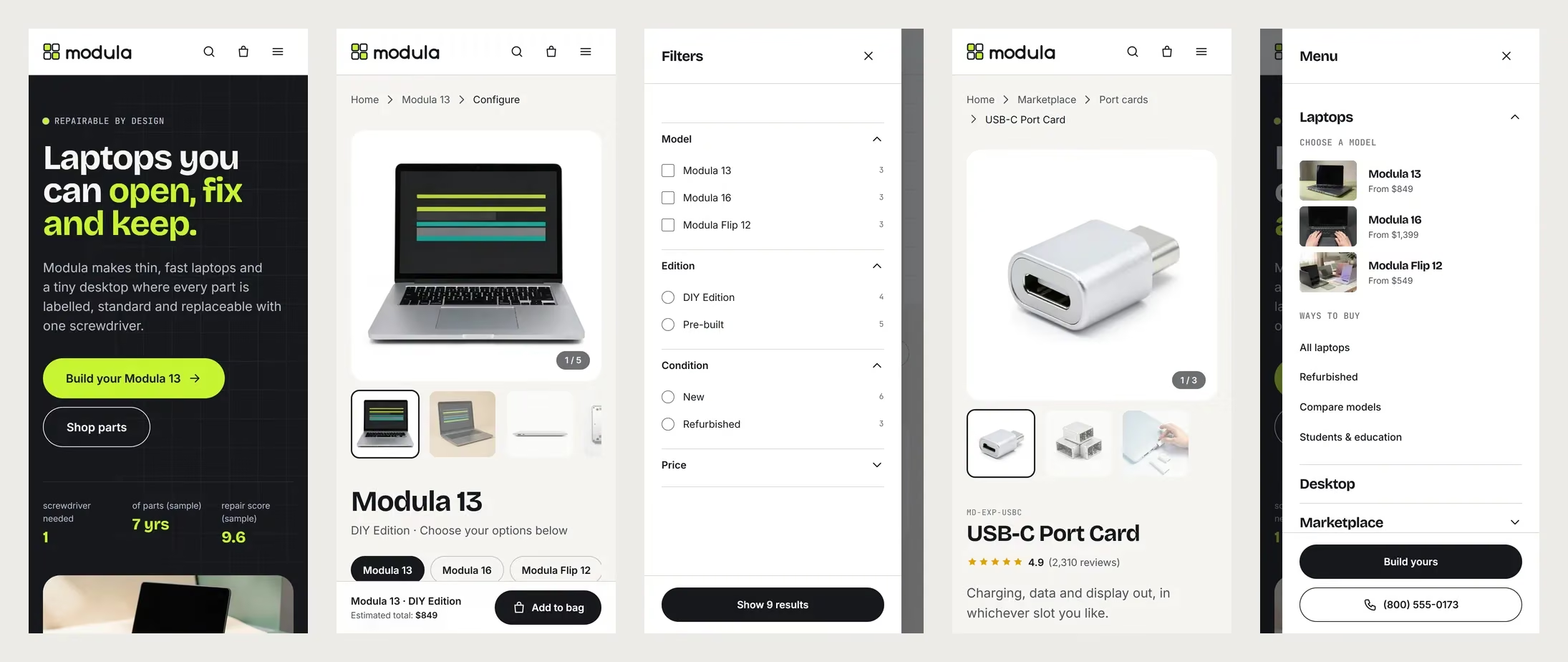
On phones, filters move into a drawer, the configurator keeps its buy bar, and every control is at least 44 pixels tall.
We delivered
- Sitemap audit and template plan
- UX architecture for 18 page templates
- Design system: tokens, components and a live styleguide
- Laptop configurator, filters, compatibility checker and trade-in flow
- Accessible front end with structured data on every page
- Region-ready setup for new brands and languages
Planning a product website?
We design and build websites for consumer electronics and product brands, from configurators to repair hubs.
Frequently asked questions
Is Modula a real company?
No. Modula is a concept brand we created for this project. All products, prices and reviews are sample content.
What did the electronics website design include?
X architecture, a design system, page templates and a working front end with a configurator, product filters, a compatibility checker, repair guides and a trade-in flow.
Can you build a laptop configurator or product website for my brand?
Yes. We design and develop product websites and configurators for electronics brands. Contact us to discuss your project.