

Reverie: AI fashion e-commerce website design
A concept AI personal stylist for fashion. We designed its brand, conversational shopping experience and motion, then built it as 12 templates and 30 product pages ready for new markets.
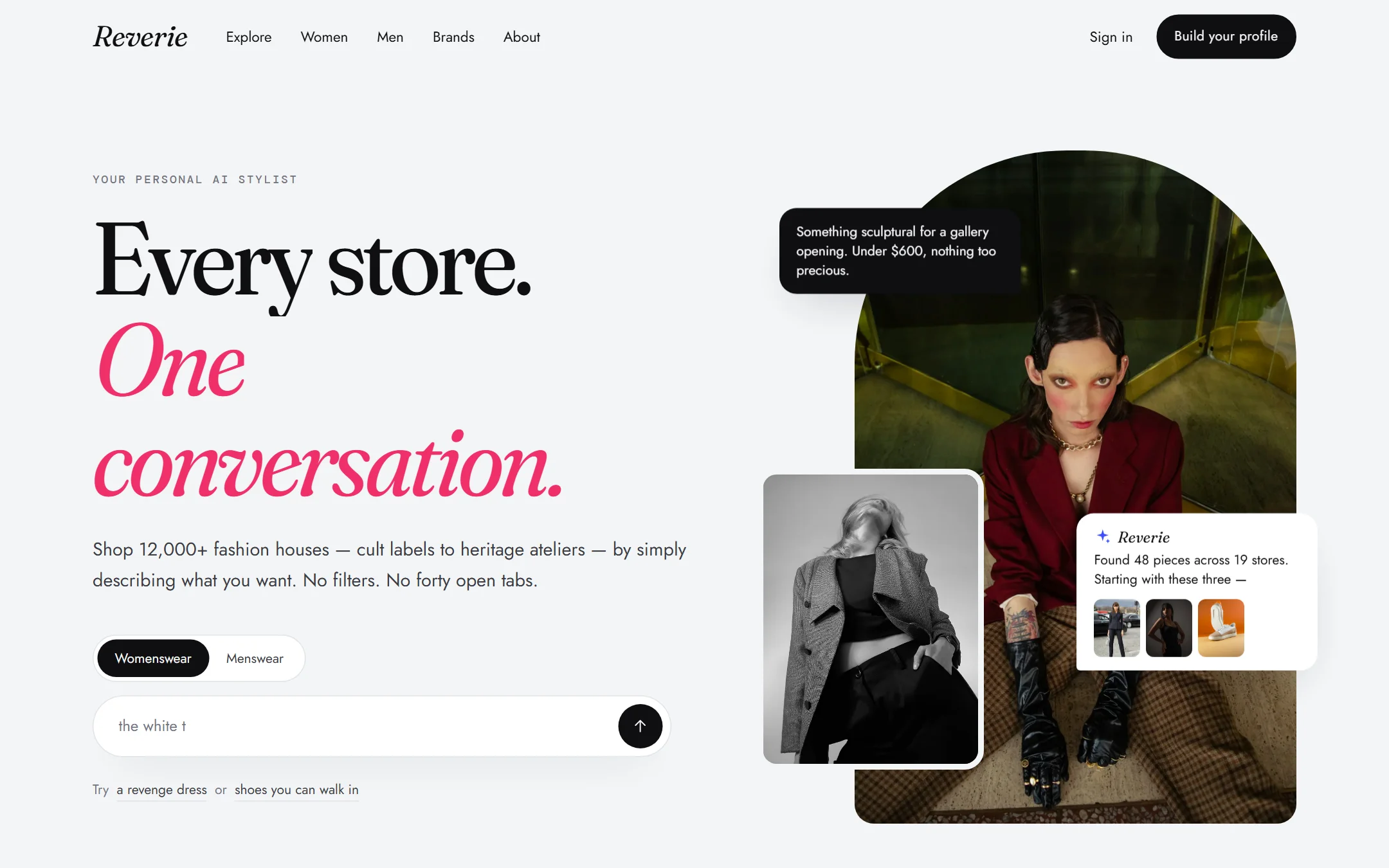
Reverie is a concept AI personal stylist: shoppers describe an occasion, a mood or a half-formed idea, and it answers with outfit suggestions from across fashion brands. We made it to show how a fashion web design agency approaches fashion e-commerce website design end to end, from an AI fashion app and AI personal stylist app concept to a working site. That meant the brand, the conversational shopping experience, the motion and a multi-market front-end build, in one continuous project.
Project facts
- Type — self-initiated concept. Reverie, its brands, products, prices and member numbers are sample content.
- Industry — fashion and luxury e-commerce, AI
- Services — brand identity, UX and UI design, motion design, front-end development, localization architecture
- Deliverables — 12 page templates, 30 product detail pages, a design system, a virtual try-on module
- Market — United States, built to roll out to new locales
The challenge: fashion search is broken
You can book a flight or cross a city in seconds. Finding a navy cashmere crew neck that isn’t boxy, isn’t overpriced and is actually in stock in your size still takes forty tabs.
Reverie’s answer is conversational: describe what you want and let AI do the searching. Conversation alone doesn’t sell clothes, though. Fashion is visual, emotional and personal. That shaped the design problem for this fashion e-commerce website:
- Trust. Make an AI stylist feel as credible as a luxury boutique.
- Discovery. Make a chat interface work as a browsing experience, not just a search box.
- Conversion. Turn inspiration into a confident purchase on a product page.
- Scale. Keep the system ready for new countries, currencies and languages from day one.
Fashion brand identity: editorial, not algorithmic
Most AI shopping tools look like software. Reverie had to look like fashion, so we based its luxury brand positioning on the language of magazines: generous whitespace, expressive serif headlines and photography given room to breathe.
- Wordmark. Reverie, a daydream, set in an italic serif that reads like a magazine masthead.
- Typography. Fraunces, a soft high-contrast display serif, for headlines. Jost, a geometric sans with a Futura feel, for body text. DM Mono for small editorial labels. Together they avoid the rigid SaaS look and stay legible.
- Color. A cool white-grey canvas, near-black ink, a vivid raspberry accent for emphasis and an electric cobalt for AI moments. Calm enough to let product imagery lead.
- Art direction. Street style, studio portraits and evening wear, cropped into arches and editorial grids.
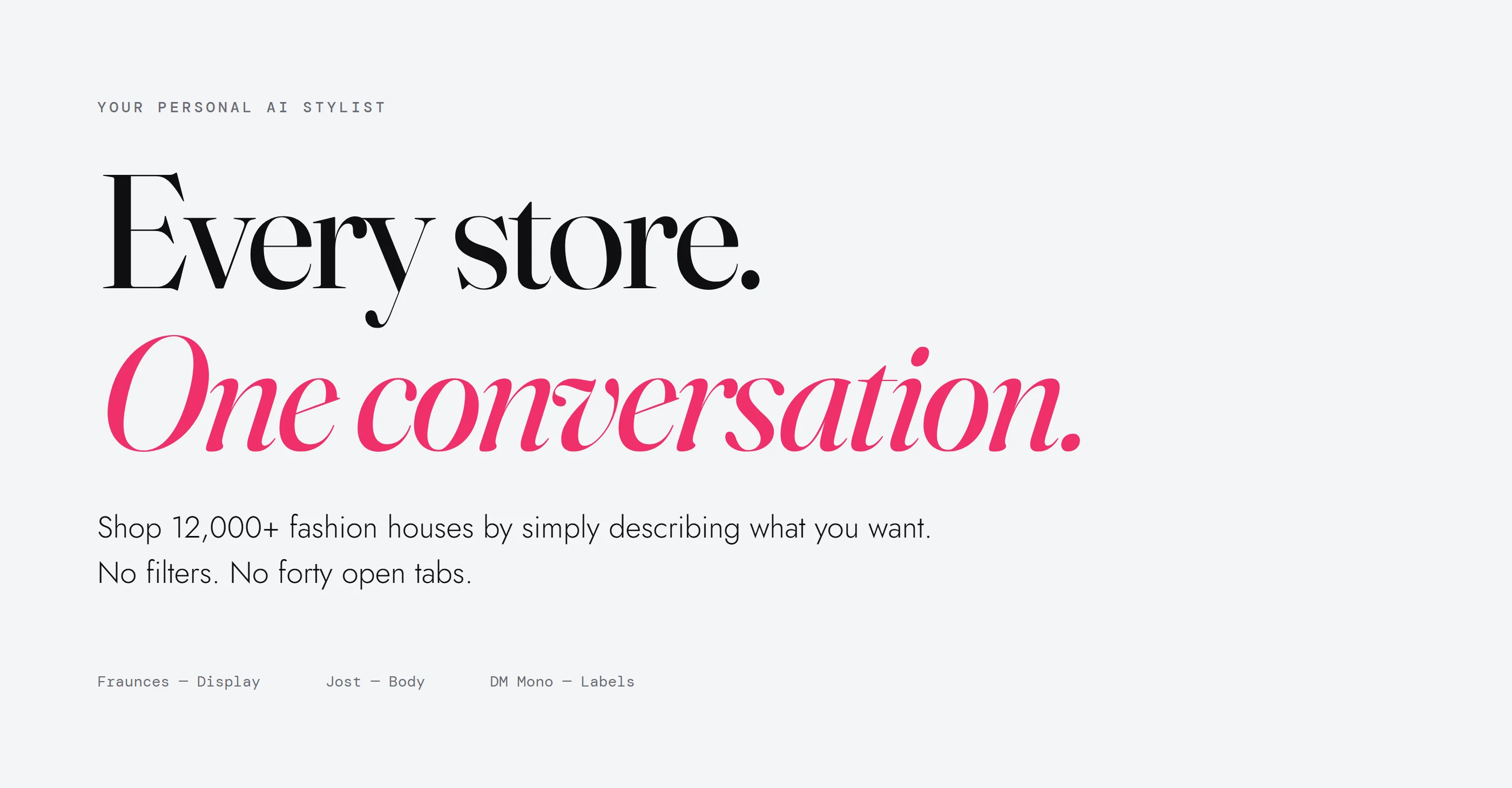
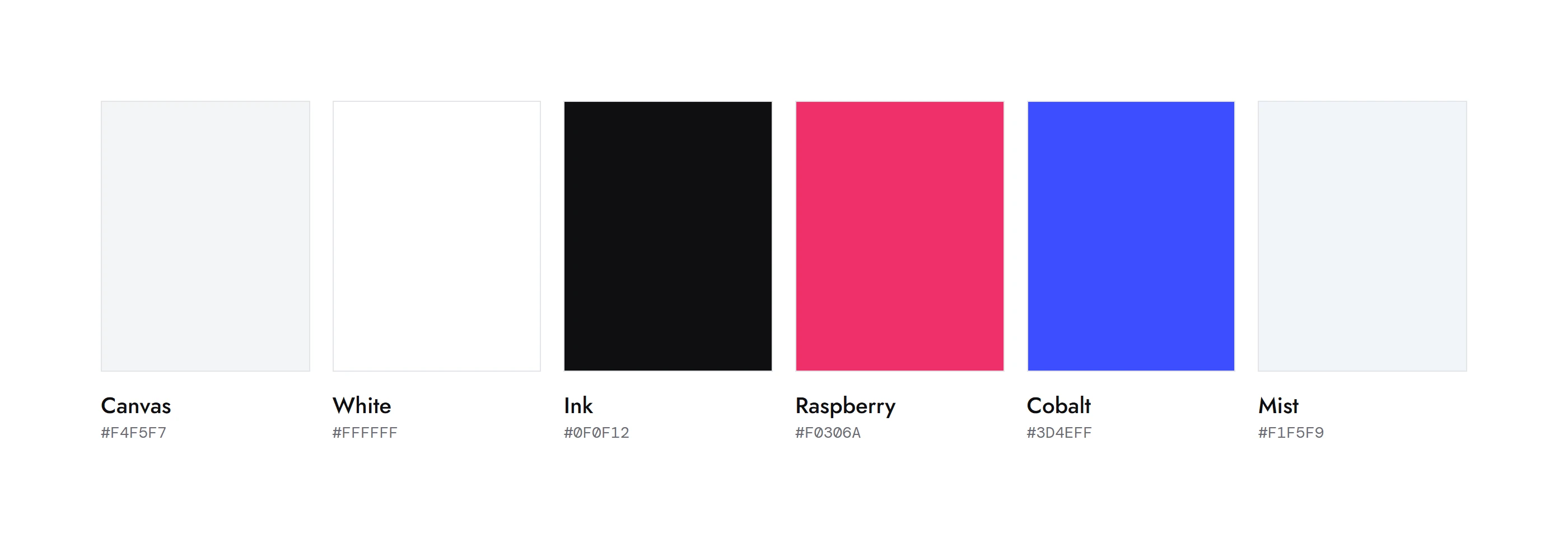
As a fashion branding agency and luxury web design agency, our branding work on Reverie ran from positioning to a wordmark, type and color system that carry through every template: identity, interface and imagery as one voice, the way a luxury e-commerce design agency would deliver it.
Fashion website UX strategy: shopping the way people actually think
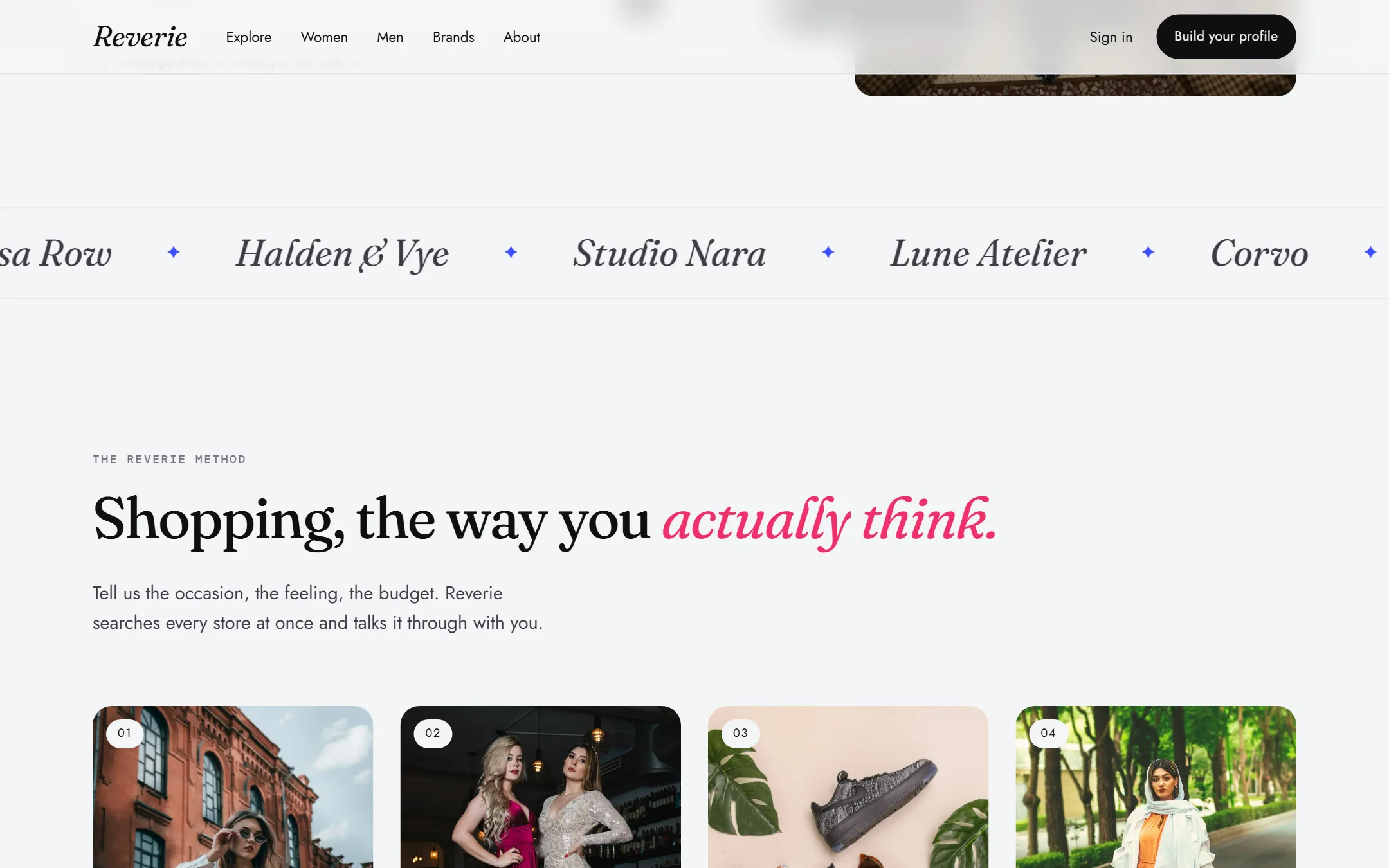
We mapped how people describe clothes to a friend and designed the fashion website UX around four moments:
- Explore: start with a mood, a screenshot or an occasion.
- Chat: talk to a stylist who knows every store.
- Save: build collections as you go.
- Refine: “Say more” to turn almost-right into exactly right.
These four steps appear on the homepage as an illustrated method. They also set the structure of the whole personal style app and fashion app product design: Explore, Shop, Brands and Profiles.
Conversational shopping interface design
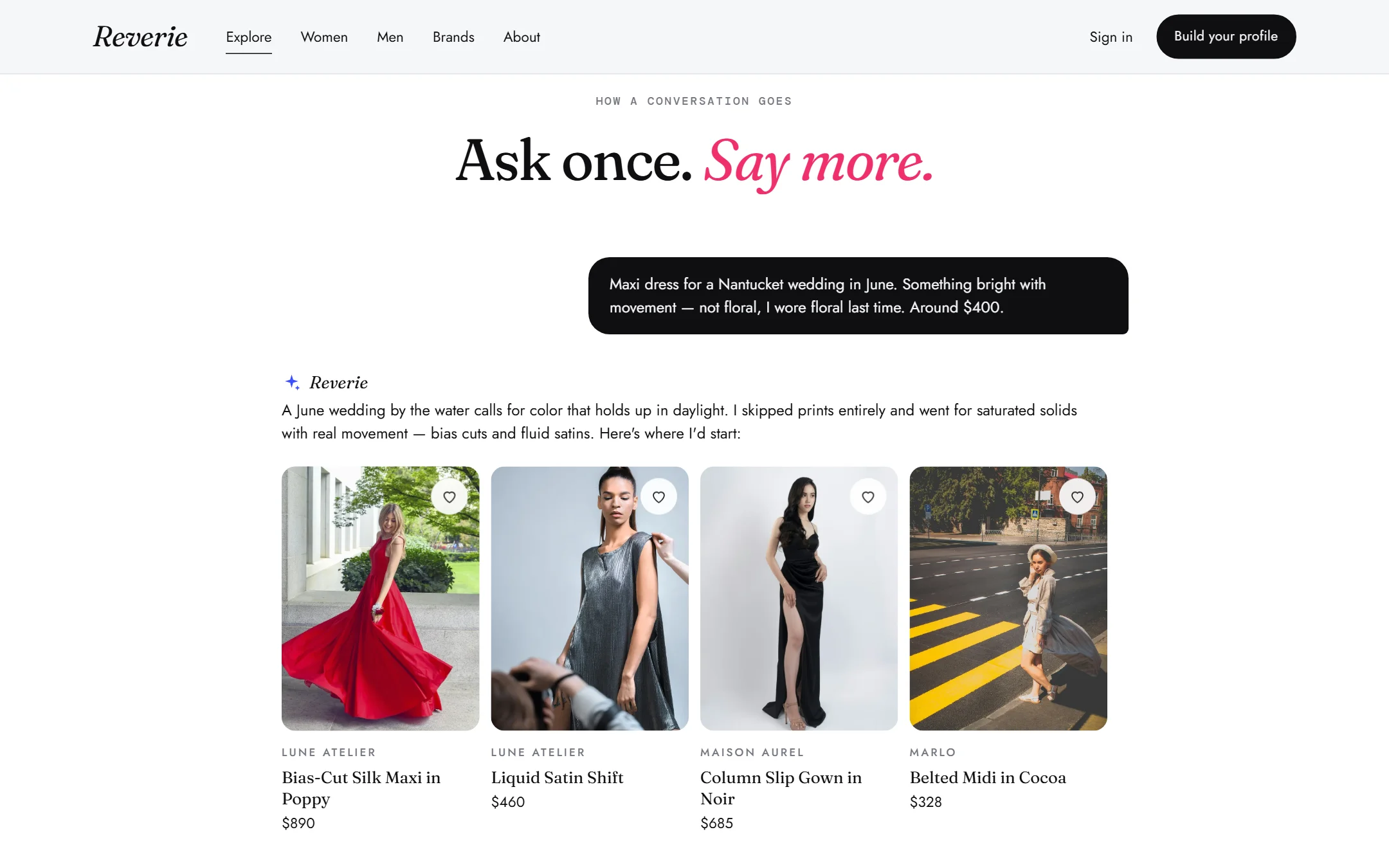
The core of the product is the chat. We treated every message as a styled moment, not a chat bubble:
- Composer everywhere. The prompt bar appears in the hero, on brand pages, inside the product grid and on every product page, so you’re always one sentence from a new search.
- Typewriter prompts. The placeholder types and rewrites real requests (“a wedding guest look for Napa in May”, “the white tee that actually fits”). It shows people what to ask without a tutorial.
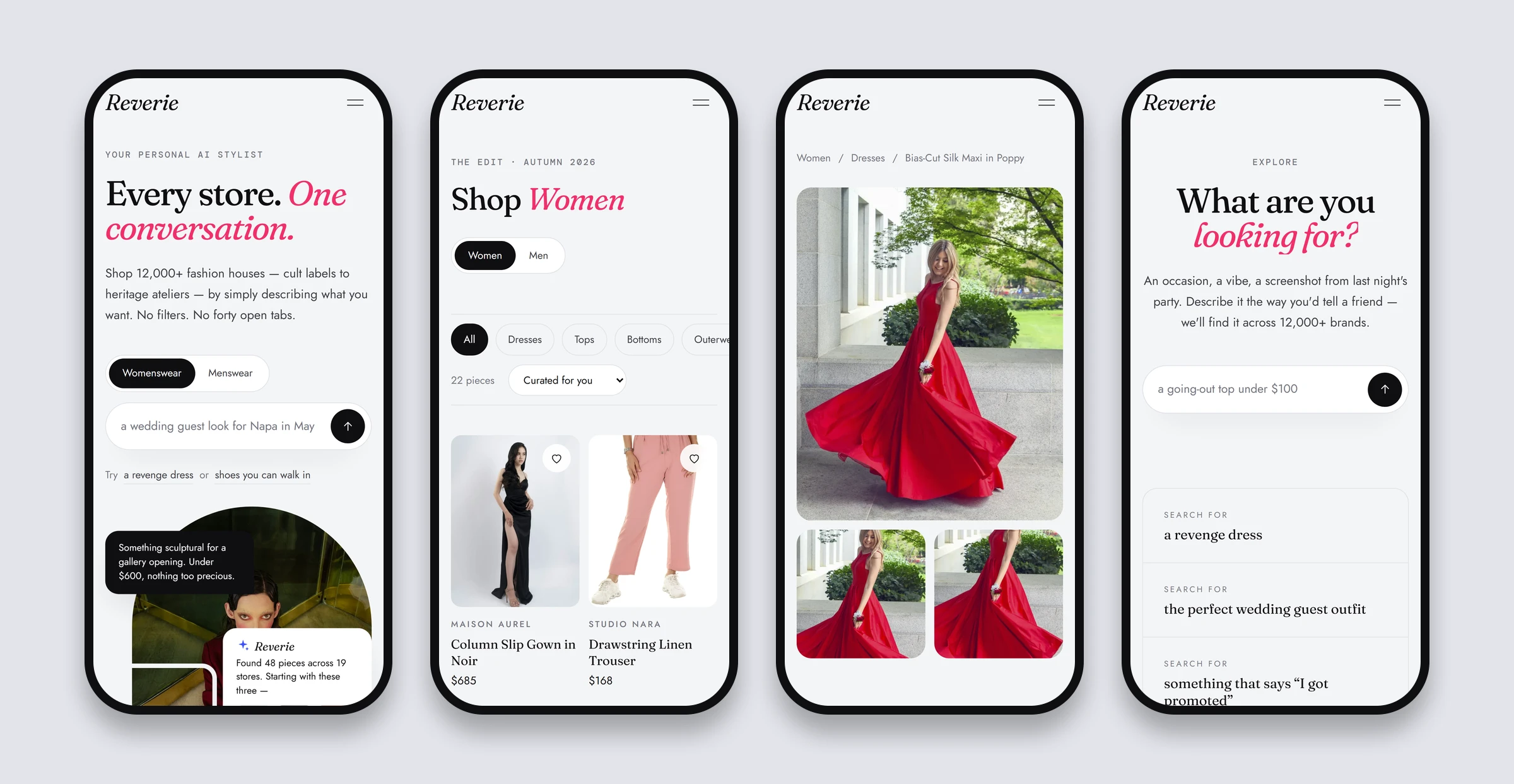
- Prompt library. The Explore page turns twelve requests, from “a revenge dress” to “shoes you can actually walk in”, into an editorial grid. One click loads a prompt into the composer.
- Answers as editorials. Stylist replies pair a short, human explanation with shoppable product cards. Follow-up chips (“Longer hemline”, “Sustainable only”, “Try emerald”) make refinement one tap.
This is conversational search UX built for fashion: outfit suggestions, AI outfits and outfit AI that feel curated rather than ranked. The same composer is ready for a next step, visual search e-commerce UX, where shoppers search clothes by image.
A fashion discovery platform that rewards browsing
Not everyone arrives with a question. For people who like to browse, we designed:
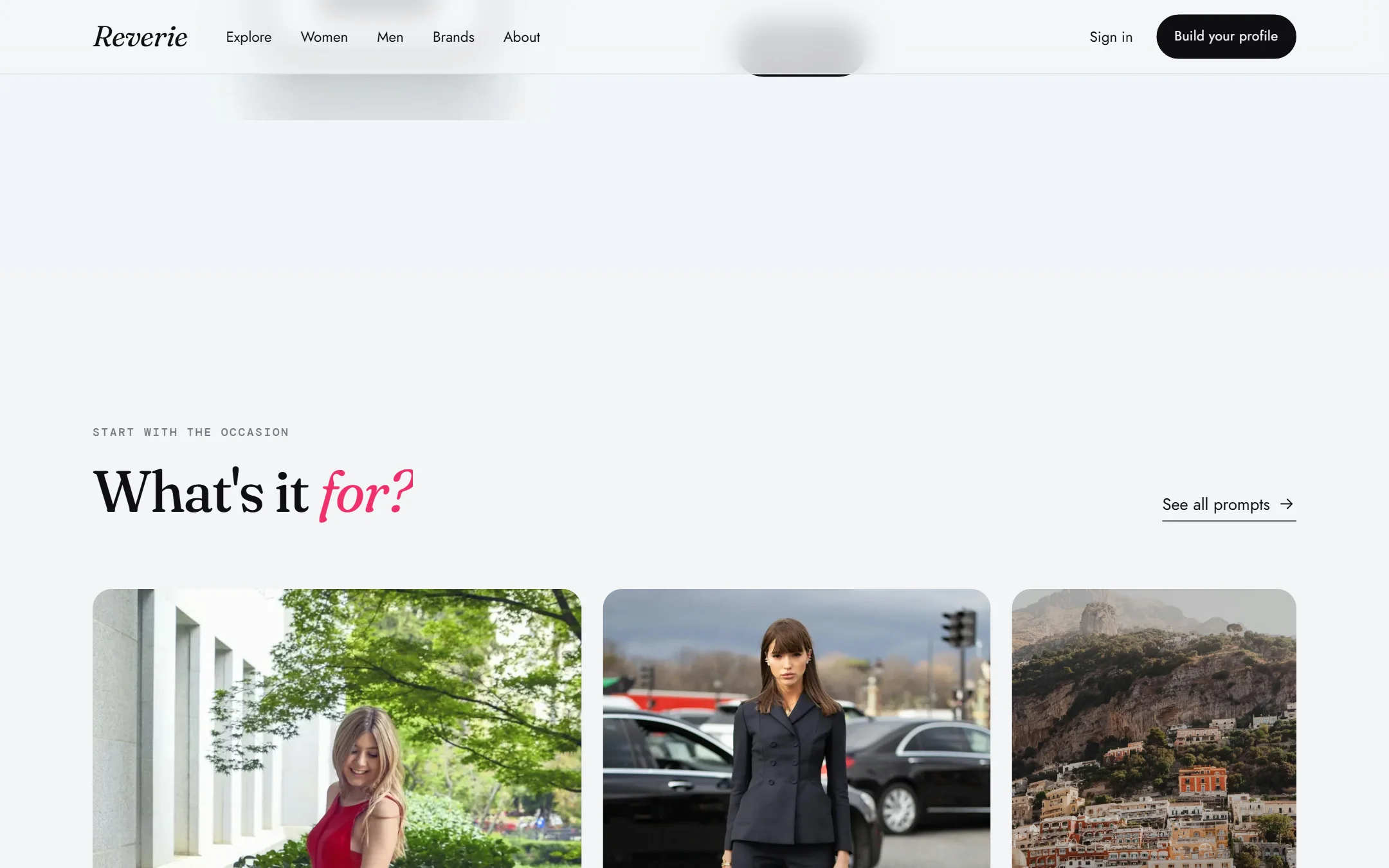
- Occasion-led entry points. A magazine-style grid of occasions (wedding season, desk to dinner, Positano, black tie) that opens a pre-filled stylist conversation.
- Women and men edits. A browse page with instant department switching, sticky category filters and a live piece count. A dark “Can’t find it? Describe it instead” card sits inside the grid to pull browsers back into conversation.
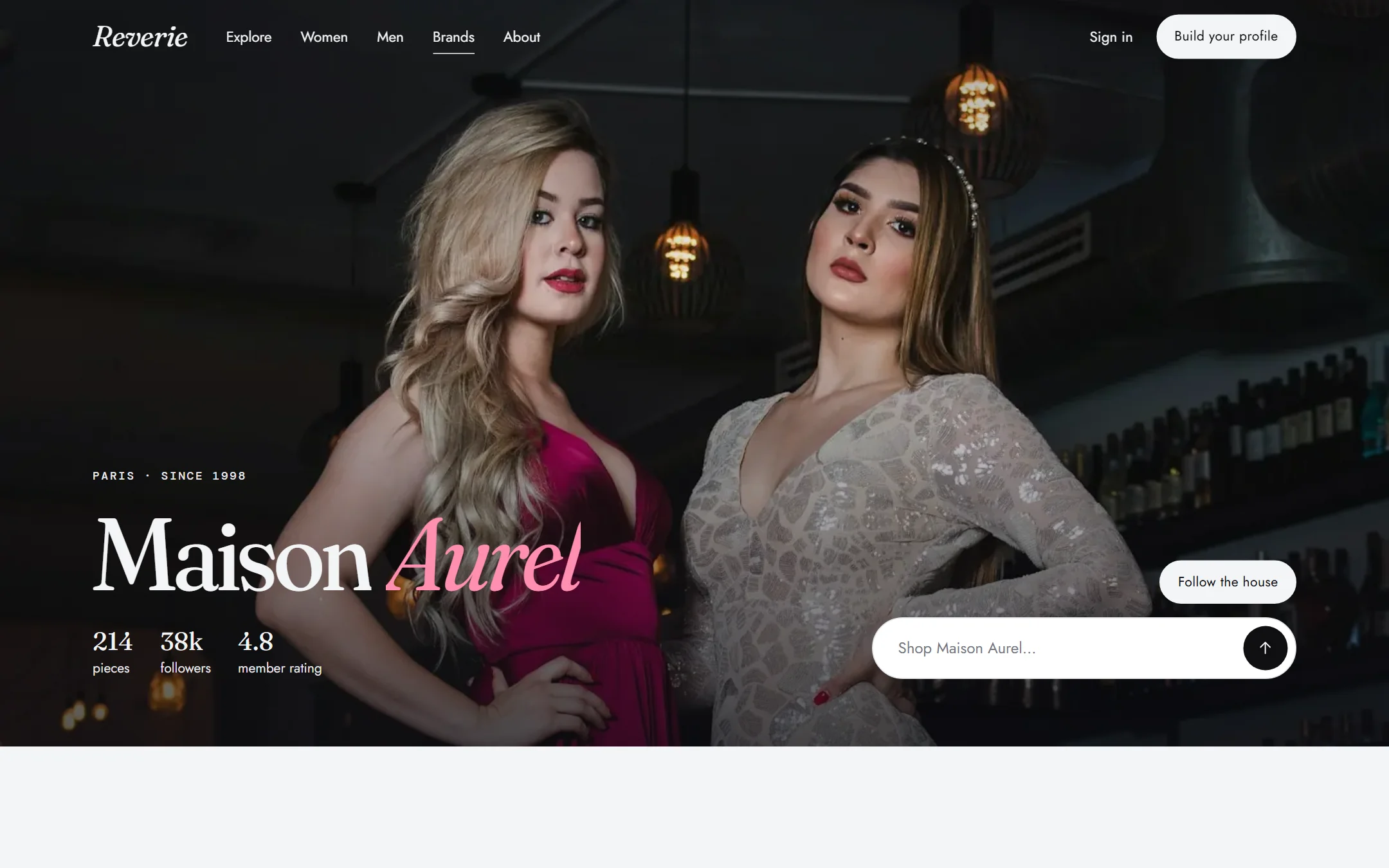
- Brand storefronts. Full-bleed brand heroes with follower stats, a brand-scoped composer and the house story.
Product detail page: fashion e-commerce conversion optimization at the moment of purchase
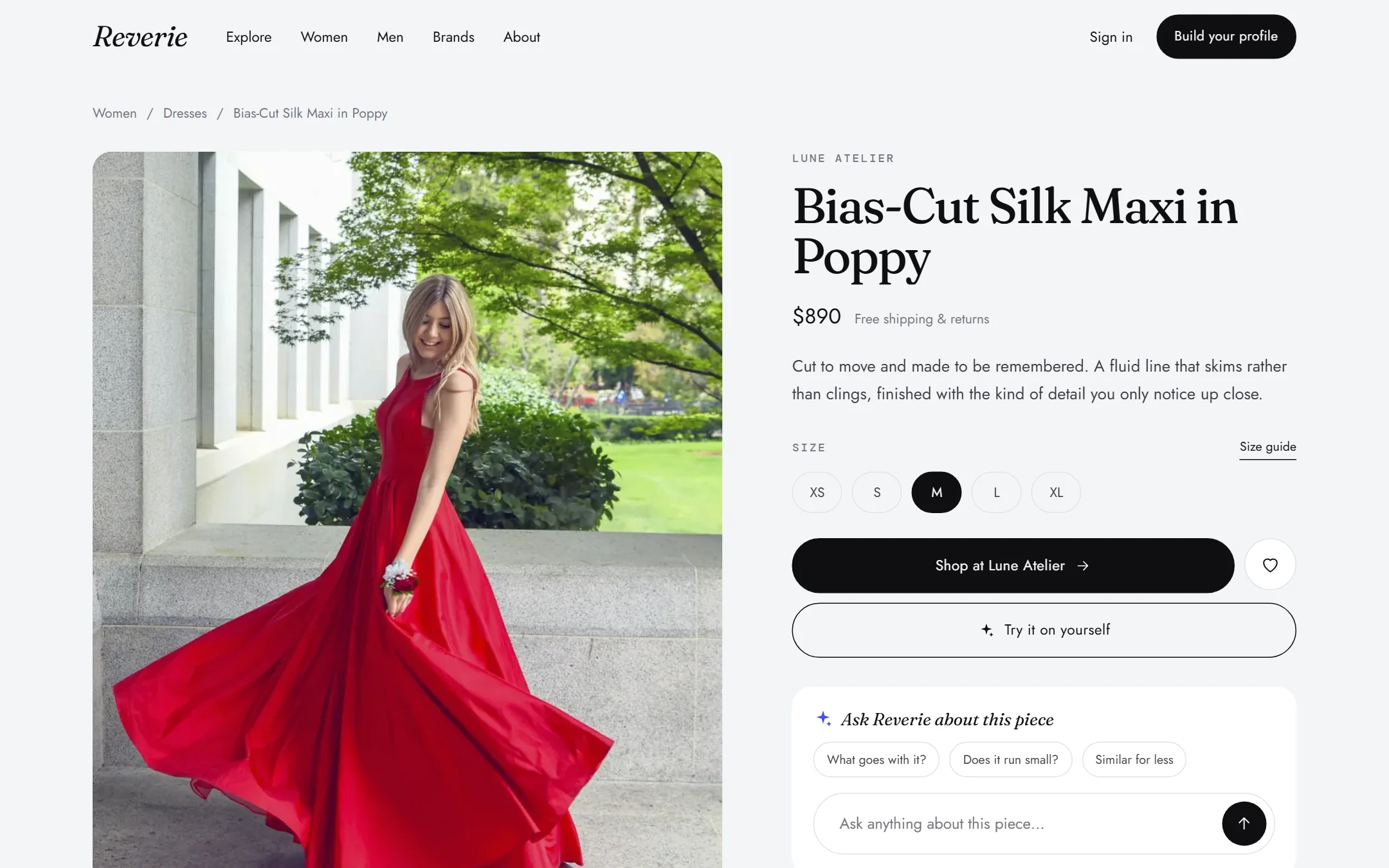
The product page is where luxury e-commerce UX either converts or leaks. Our apparel conversion optimization decisions, which a UX audit can test on a live store:
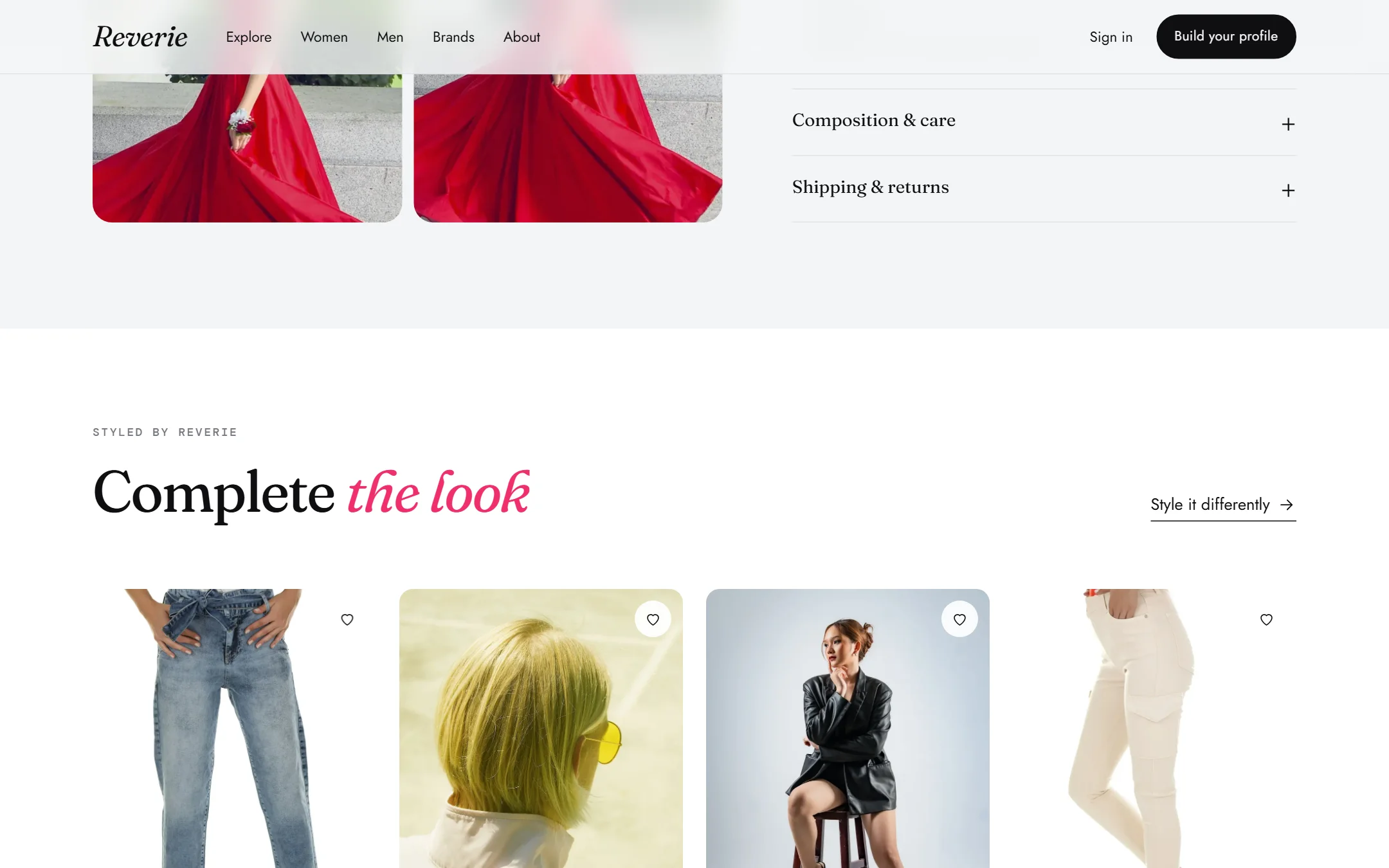
- Sticky purchase panel. Brand, name, price, size and the call to action stay in view while shoppers study the gallery.
- Editorial gallery. One hero image plus detail crops, revealed with a vertical “unwrap” as you arrive.
- Size validation with personality. If you tap “Shop” without picking a size, the size row shakes gently and a hint appears. No modal, no error page.
- “Ask Reverie about this piece.” Inline questions (“Does it run small?”, “What goes with it?”, “Similar for less”) answer the hesitations that usually end a session.
- Complete the look. Cross-category styling below the fold, framed as styling rather than an upsell.
- Transparent pricing. “Free shipping & returns” and “you always pay the brand’s own price” sit next to the price.
Virtual try-on
A concept feature we designed for the moment shoppers stop scrolling: upload one full-body photo and try on clothes virtually, swapping jackets, trousers and dresses from any brand. On the site, the try-on demo plays inside a phone frame on a soft grey panel colored to match the footage, so the device seems to float on the page. It plays only while on screen. Three clear requirements (one photo, good light, just you) remove the friction of a first try.
Fashion app motion design and micro-interactions
Motion gives Reverie its editorial rhythm. Every section has a scroll-triggered reveal, and every interaction gives feedback:
- Word-mask headlines rise word by word from behind an invisible line, like a magazine cover being set.
- Image unwrap opens arched and editorial images vertically while they settle from a slight zoom.
- Staggered grids cascade product cards, steps and testimonials in sequence.
- Counting stats count up on arrival.
- Floating chat bubbles drift gently over the hero photography.
- Brand marquee scrolls partner names in an italic ticker that pauses on hover.
- Typewriter composer types real shopping requests into the prompt bar.
- Heart pop fills the heart with a spring-like pop when you save an item.
- Glass header blurs the navigation into frosted glass on scroll.
- Size-row shake gives friendly validation on product pages.
All motion respects the reduced-motion setting, so the site stays calm for people who prefer less animation.
Community: profiles and collections
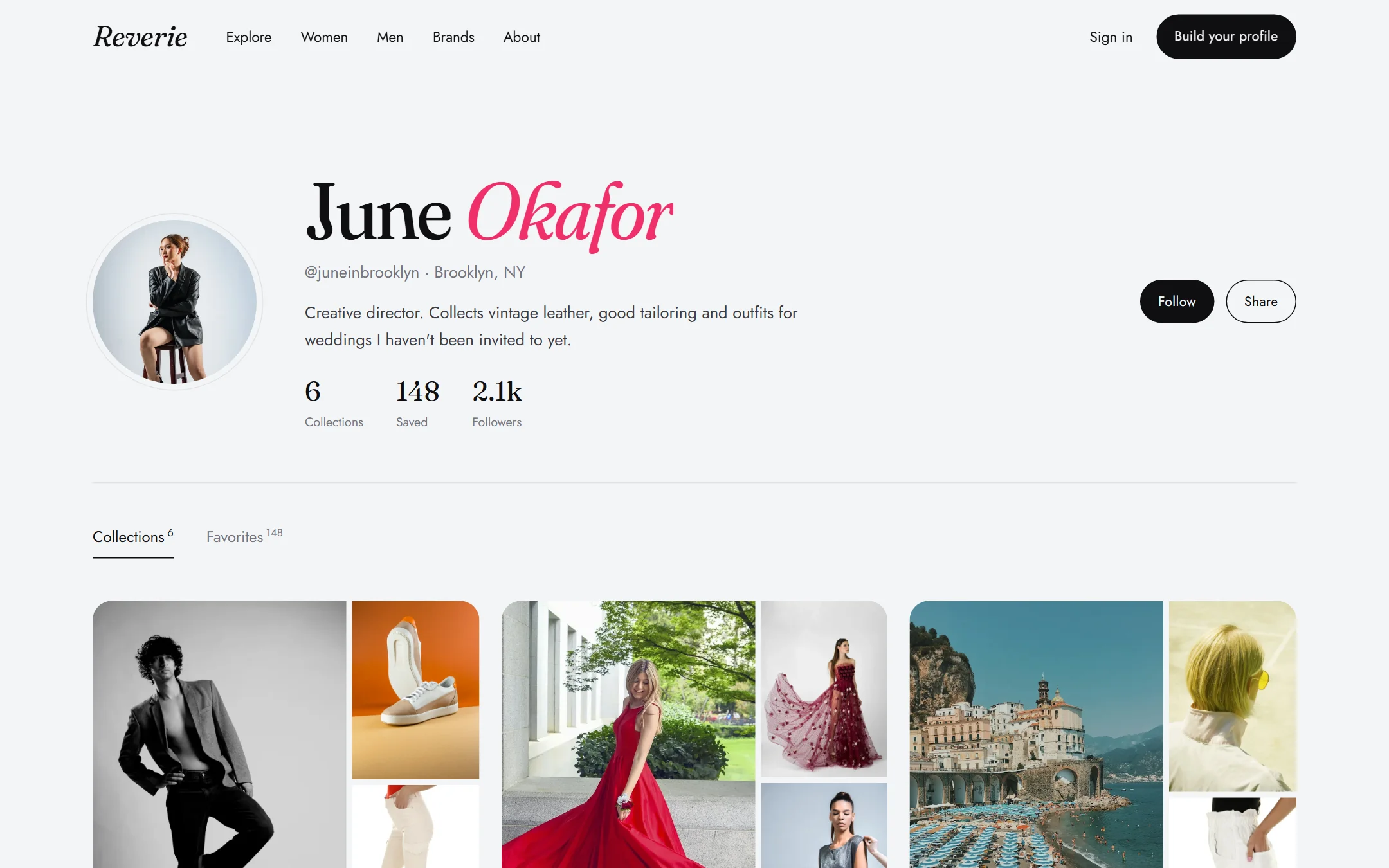
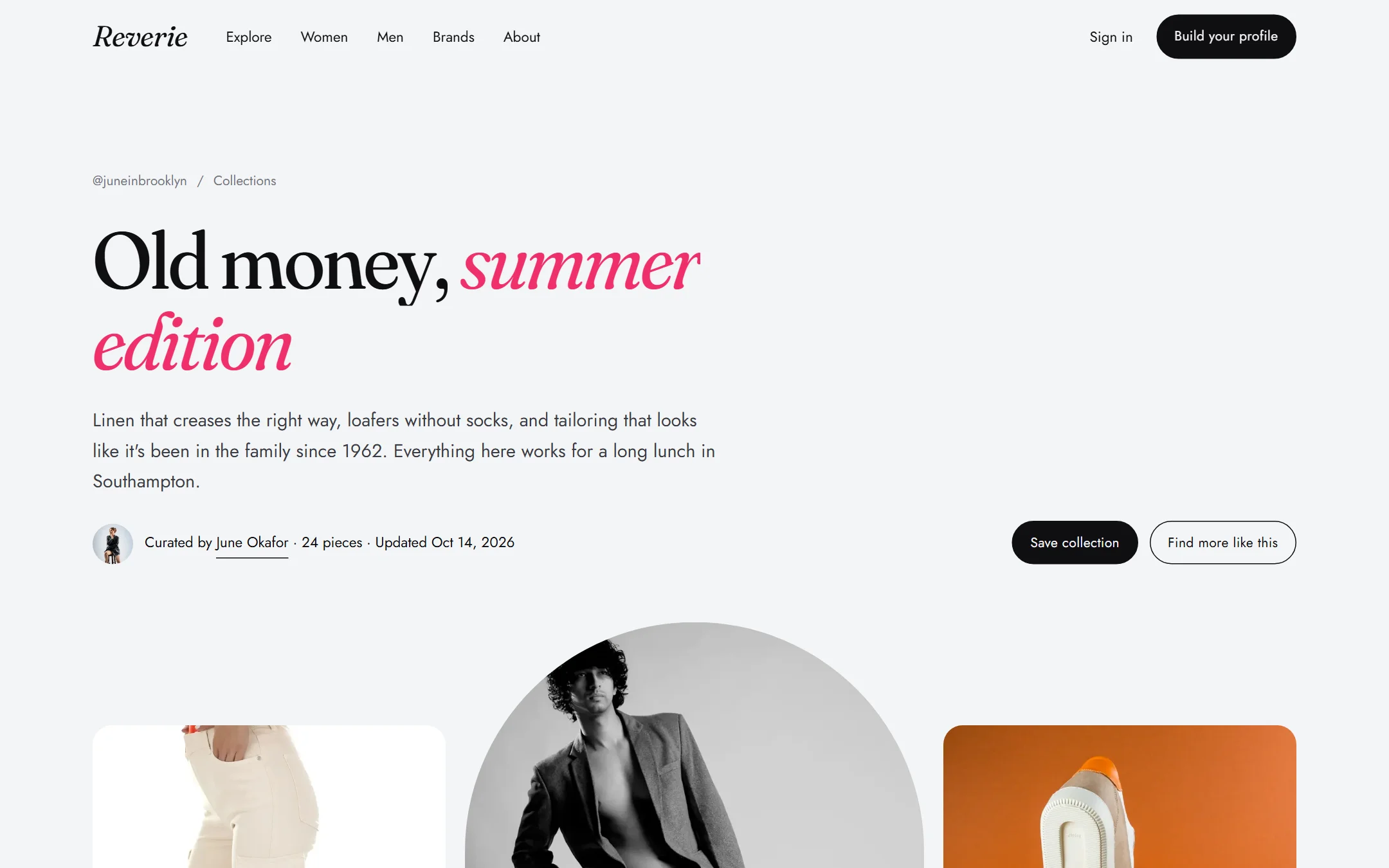
Styling is social. Member profiles show a person’s collections (“Napa wedding, May”, “Coats I think about at night”) as three-image mosaics. Each collection page credits its curator, lists the pieces and links to “Find more like this”, so personal shopping online becomes something people share.
A fashion design system built to scale
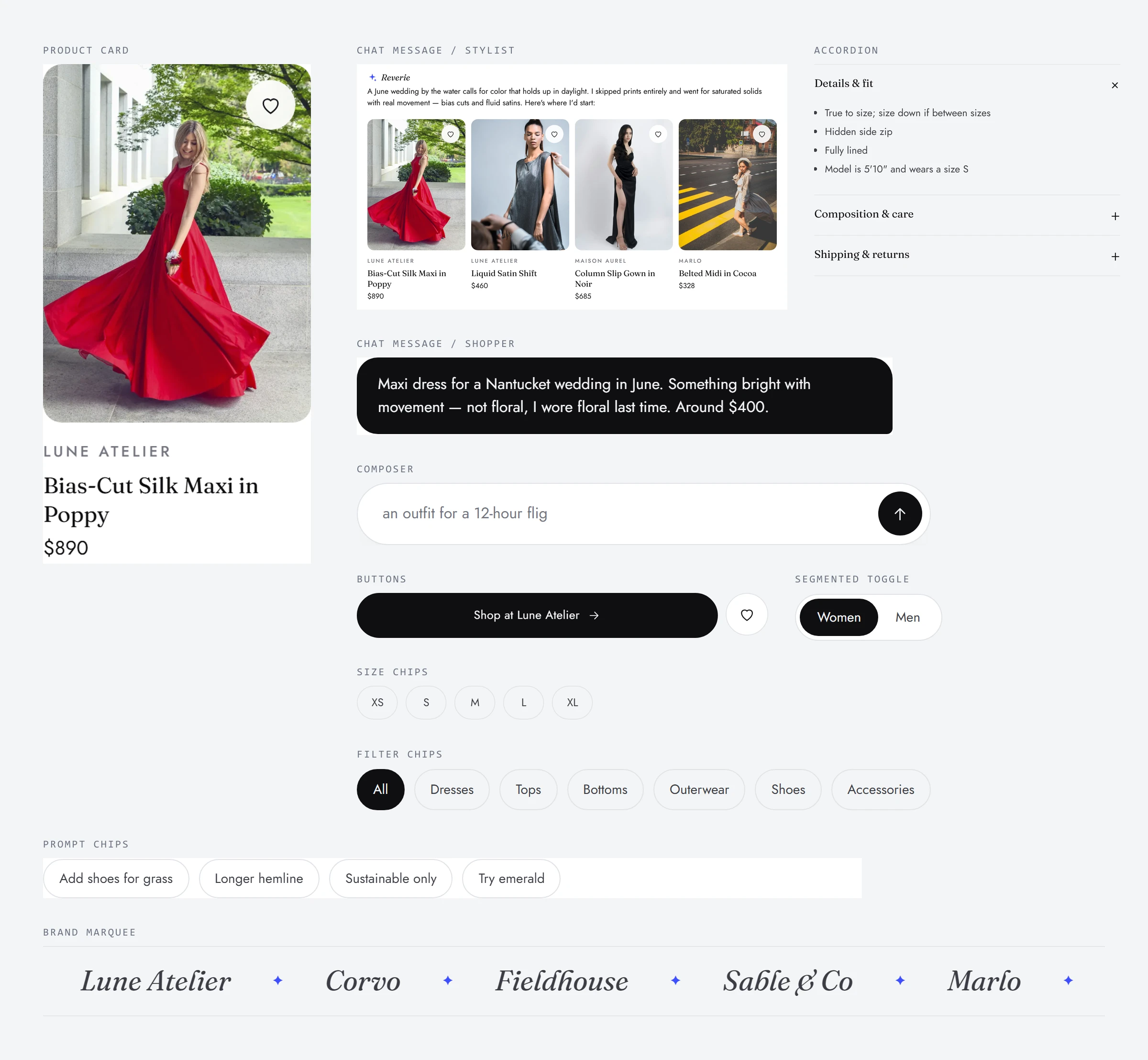
Behind the pages sits a compact fashion design system, an apparel design system UI: color, type and spacing tokens, plus a small component library shared by every template.
- Product card with save, brand, name, price and hover zoom
- Composer and prompt chips
- Segmented toggles and filter chips
- Chat messages (shopper and stylist)
- Editorial grids: occasions, mosaics, arches
- Accordions, a legal layout with an auto-highlighting contents list, and forms
Changing a single token re-themes the whole site, which is how one market can get its own accent color while sharing everything else. See our design systems work.
Fashion website development for accessibility and global markets
Apparel website development works best when performance, accessibility and localization are planned from the start. As a fashion website development company, we built:
- Static build. Pre-rendered HTML with no heavy framework and a single script.
- Optimized media. Photography in WebP, and the try-on animation converted from a 2 MB GIF to a looping video under 300 KB.
- Accessible by default. Semantic HTML, keyboard focus states, a skip link, descriptive alt text, native accordions and reduced-motion support.
- Localization-ready. One build generates every locale from a shared layout. Each market defines its language, currency formatting, price conversion, address and theme in a single config file, and all 30 product pages are generated per market.
What we delivered
- Brand positioning and a visual identity: wordmark, type, color and art direction
- UX strategy and information architecture for an AI personal stylist site
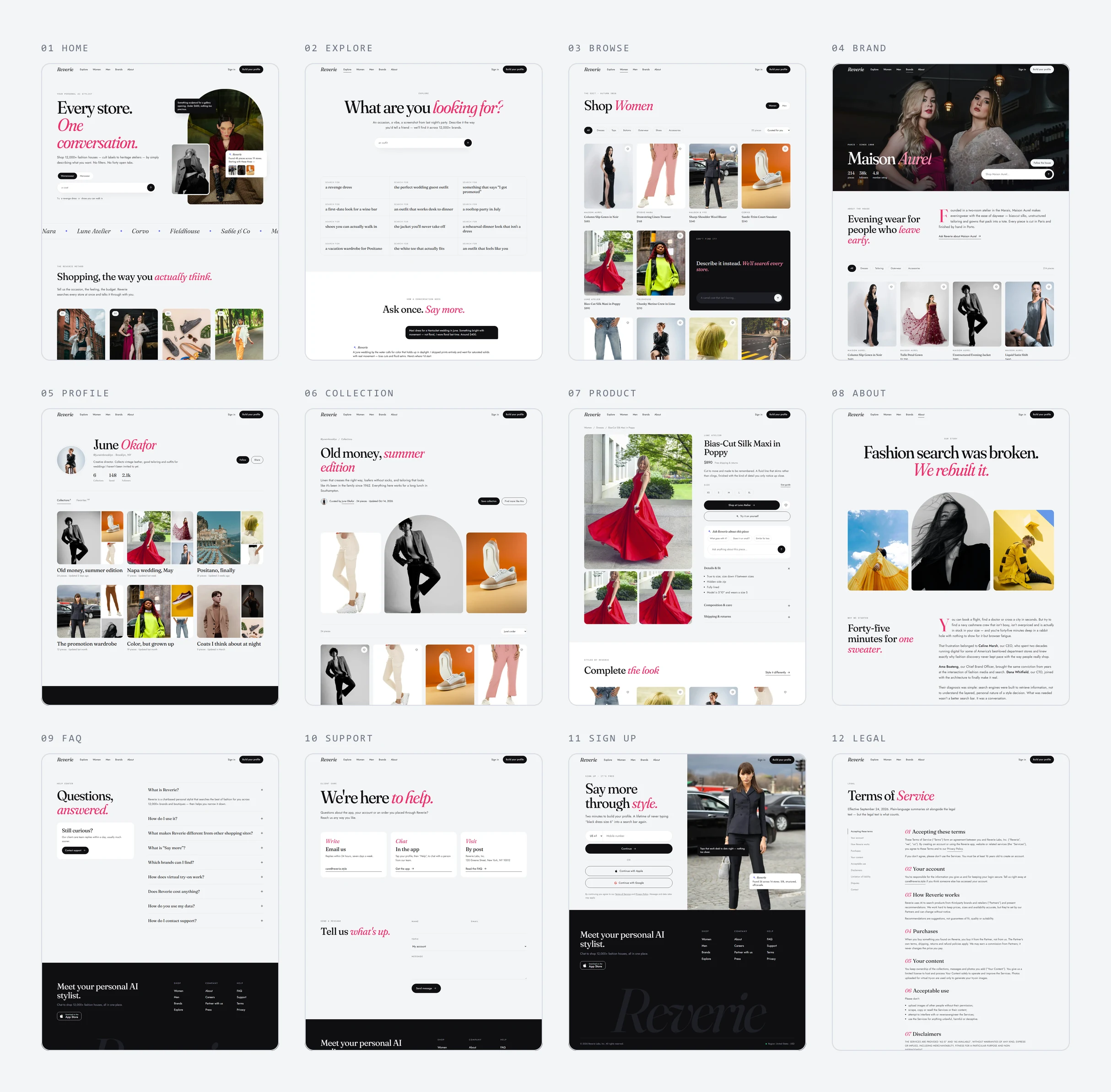
- 12 responsive page templates: home, explore, browse, brand, profile, collection, product, about, FAQ, support, sign-up and legal
- 30 generated product detail pages
- A motion language and interaction design
- A front-end build with a reusable design system and a multi-locale architecture, as part of our web design service
Planning a fashion e-commerce website?
From luxury brand positioning to conversational UX and motion, we design and build fashion experiences people want to come back to. Need a fashion web design agency, luxury web design agency or fashion creative agency that can take a brand from positioning to production? See our web design and branding services, or more work in the fashion industry.
FAQ
Is Reverie a real company?
No. Reverie is a self-initiated concept we created for this project. The brands, products, prices and member numbers are sample content.
What does a fashion web design agency do?
A fashion web design agency shapes how a brand looks, feels and sells online: brand identity, art direction, UX for browsing and checkout, motion, and front-end development. On Reverie we covered every one of these, from positioning to the working build.
How do you design a conversational shopping interface?
Start with how people naturally describe clothes, then design every message as part of the shopping experience. That means prompts that teach by example, stylist replies that combine explanation with shoppable products, and one-tap follow-ups for refining.
What makes luxury e-commerce UX different?
Restraint and confidence: generous space, editorial typography, imagery-first layouts, and reassurance such as transparent pricing and free returns placed right where decisions are made.
How do you approach fashion e-commerce conversion optimization?
Remove hesitation at the moment of decision: sticky purchase panels, inline fit answers, friendly size validation, and complete-the-look styling that lifts basket size naturally.
Can a fashion website be ready for multiple countries from launch?
Yes. We build a shared design system and a locale layer, so each market controls its language, currency, pricing and theme without rebuilding pages.